Say Goodbye to Limescale: How to Soften Hard Water
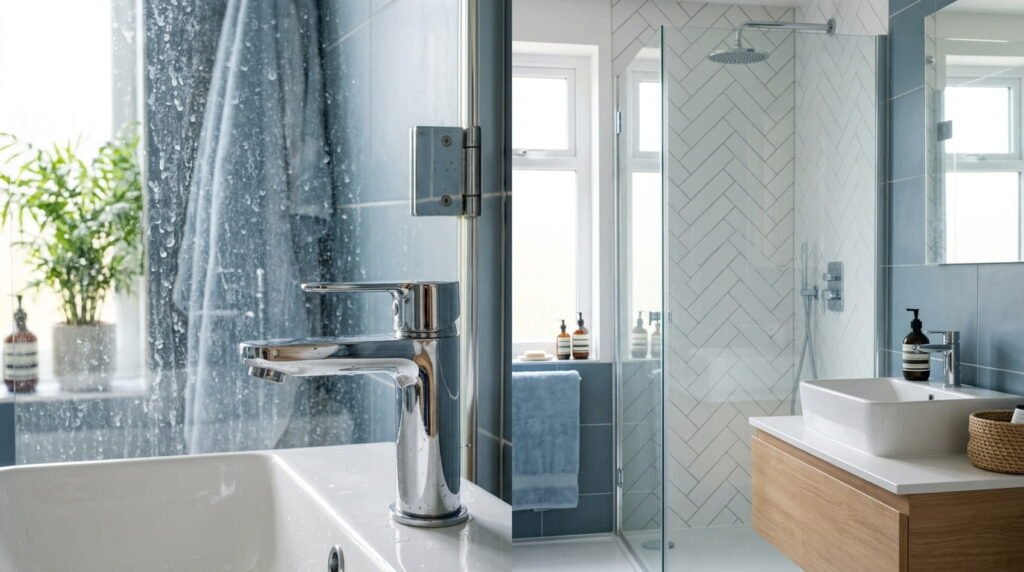
How to Soften Hard Water
Hard water can make everyday cleaning a frustrating chore, leaving stubborn limescale around taps, shower screens, kettles, and household appliances. Fortunately, there are several ways to manage it—but each method works differently. If your goal is to genuinely soften water throughout your home genuinely, an ion-exchange water softener is one of the most established solutions, because it reduces calcium and magnesium, the main minerals responsible for water hardness.
Quick answer: Softening hard water requires reducing the amount of calcium and magnesium that are found within the water. This can be accomplished throughout the house using an ion exchange water softener. Boiling can temporarily reduce the hardness of the water. Some types of filters can enhance the overall quality of the water; however, they will not eliminate all the minerals that cause the water to be considered “hard.” Descalers will remove scale from surfaces; however, they will not make the water soft.
Key Takeaways:
- Hard water is mainly caused by calcium and magnesium dissolved in the water.
- Ion-exchange water softeners can reduce these hardness minerals throughout your home.
- Boiling may reduce some temporary hardness, but it is not a complete solution for all types of hard water.
- Water filters and conditioners can improve certain aspects of water quality, but they may not actually remove hardness minerals.
- Descaling products can tackle existing limescale, but they do not soften the water itself.
- Choosing the right hard-water solution depends on your water hardness, household needs, budget, and the level of limescale you experience.
Table of Contents
The Ultimate Guide to Softening Your Hard Water – 7 Easy Methods To Eliminate Limescale In Your Home.
Hard water can make everyday life surprisingly frustrating. You may notice white limescale around your taps, stubborn marks on the shower screen, deposits inside your kettle, or appliances that seem to need more cleaning than they should.
If you live in a hard-water area of the UK, you may have wondered: How can I soften hard water, and which method actually works?
The answer depends on what you want to achieve. Some methods can reduce certain types of hardness, some can improve the way water behaves, and others remove limescale after it has already formed. If your goal is to actually reduce the calcium and magnesium responsible for water hardness throughout your home, an ion-exchange water softener is the most established domestic approach.
In this guide, we’ll explore 7 ways to manage or soften hard water, explain what each method can and cannot do, and help you understand which option may make sense for your home.
Quick answer: Hard water is mainly caused by dissolved calcium and magnesium salts. To genuinely soften water, these hardness minerals need to be reduced or removed. Domestic ion-exchange water softeners do this by exchanging calcium and magnesium ions for sodium ions. Boiling can remove some temporary hardness, while certain filters may reduce some hardness or improve water quality, but they do not provide the same whole-home softening effect.
Key Takeaways
- Hard water is primarily the result of having dissolved calcium and magnesium present in it.
- Limescale is probably the easiest way to see the effects of hard water.
- Ion-exchange water softeners can reduce calcium and magnesium throughout a home.
- Boiling can reduce temporary hardness, but it cannot remove all types of hardness.
- Some jug filters contain ion-exchange resin and may reduce certain types of hardness, but their effect is limited compared with a whole-house softener.
- Magnetic and electronic conditioners should not be confused with genuine water softeners because they do not remove calcium and magnesium.
- Descaling products remove existing limescale but do not soften the water.
- UK homeowners should consider their local water hardness, installation requirements, maintenance and drinking-water arrangements before choosing a system.
1. What Is Hard Water?
Hard water is water containing relatively high levels of dissolved calcium and magnesium salts.
In general, groundwater flows through the earth in geological formations (e.g., chalk or limestone). The groundwater will dissolve minerals from these formations and transport those minerals into the local water supplies. Therefore, water hardness varies dramatically across the United Kingdom.
The Drinking Water Inspectorate (DWI) of the United Kingdom explains that water hardness is caused by the dissolved salts of calcium and magnesium. Additionally, the DWI differentiates between “temporary” and “permanent” water hardness.
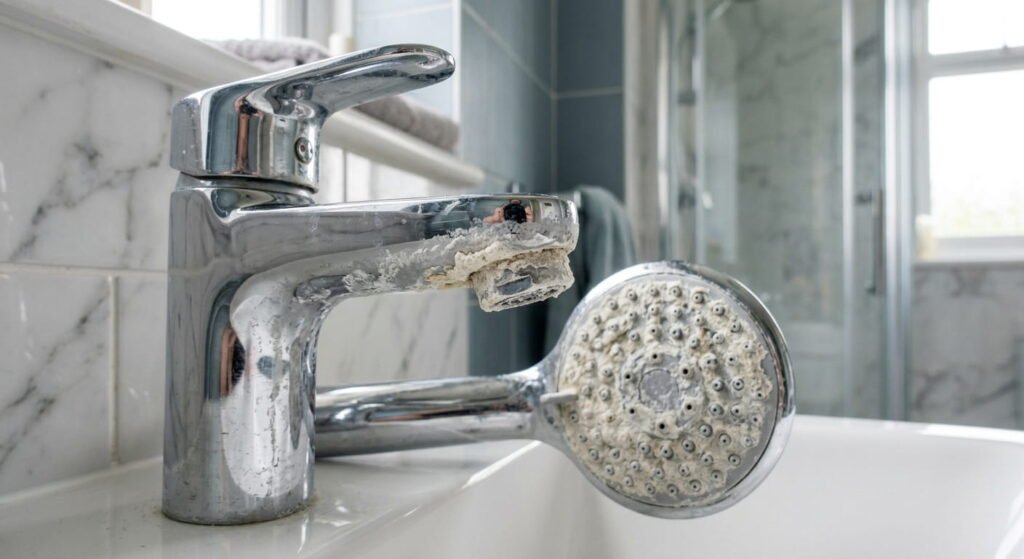
One of the easiest ways to recognise hard water is through the buildup of scale.
You might see:
- White deposits around taps
- Limescale on showerheads
- Chalky marks on shower screens
- Scale inside kettles
- Deposits around sinks and baths
- Reduced lather when using soap
- More frequent cleaning of bathroom fixtures
- Scale accumulation in hot-water systems
The problem becomes particularly noticeable when hard water is heated. Calcium compounds can precipitate and form the familiar white deposits commonly called limescale.
The DWI notes that harder water is associated with scale formation and increased soap use.
Is hard water dangerous?
Hard water itself is not generally considered a health problem in UK drinking-water regulation. The Drinking Water Inspectorate states that UK drinking-water regulations do not specify a standard for hardness, calcium or magnesium.
For many households, the biggest concern is therefore not safety but scale, cleaning, appliance performance and maintenance.
That distinction is important.
A water softener should not be viewed as something you necessarily need to make tap water safe. Instead, it is primarily a treatment option for people who want to manage the effects of hard water in their home.
2. How does Hard Water create Limescale?
When mineral content in hard water is heated or evaporated, the mineral content becomes more concentrated and precipitates; this is what creates limescale.
Think about what happens inside a kettle.
When you fill it with hard water and continually heat the same areas, over time mineral deposits may form on the heating element and interior walls.
The same basic problem can occur in:
- Kettles
- Boilers
- Hot-water systems
- Showerheads
- Taps
- Dishwashers
- Washing machines
- Pipework
This is why hard-water treatment is often about more than simply making the water feel different.
Reducing hardness can help reduce the conditions that lead to scale formation.
However, there is an important distinction:
Removing existing limescale is not the same as softening water.
A descaling product can dissolve or remove deposits that have already formed. It does not necessarily reduce the calcium and magnesium entering your property.
That means you can clean your kettle today and find new scale developing later if the underlying water remains hard.
3. How to Soften Hard Water: 7 Effective Methods
There isn’t one universal solution for every household.
The right approach depends on your water hardness, where you want treatment, how much water your household uses, and whether your goal is genuine softening or simply better control of limescale.
Here are seven common approaches.
Method 1: Install an Ion-Exchange Water Softener
If you want to soften hard water throughout your home genuinely, an ion-exchange water softener is the main domestic method to understand.
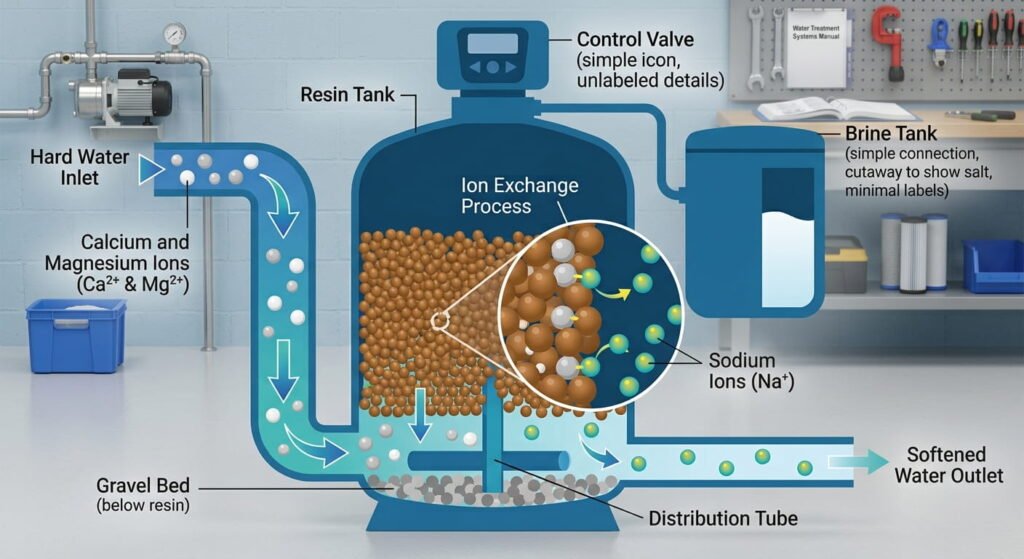
These systems contain a resin designed to exchange hardness ions.
As hard water goes through the resin, the resin takes out the calcium and magnesium ions and releases the sodium ions back into the water.
In simple terms:
Hard water → resin bed → calcium and magnesium exchanged → softened water
The Drinking Water Inspectorate identifies ion exchange as a common method used by domestic water softeners.
How does the resin work?
Inside the softener is a bed of ion-exchange resin.
The resin has sites that attract positively charged ions. Calcium and magnesium are preferentially exchanged onto the resin while sodium is released into the water.
Eventually, the resin becomes loaded with hardness minerals.
The system then needs to regenerate the resin, typically using a salt solution.
This is why water softeners require an appropriate supply of water-softener salt and regular maintenance.
How could this help me?
The installation of a water softener in an appropriate manner may assist:
- Reduce limescale formation
- Improve soap lathering
- Reduce scale in hot-water systems
- Reduce mineral deposits on bathroom fixtures
- Make cleaning easier
- Help protect appliances from scale buildup
The DWI specifically notes benefits including reduced scale formation and improved lather production and appliance efficiency.
Is a water softener right for everyone?
Not necessarily.
A softener requires installation, maintenance and ongoing salt. It also changes the mineral composition of the treated water by replacing calcium and magnesium with sodium.
For that reason, UK guidance recommends maintaining an unsoftened drinking-water supply at the kitchen tap used for drinking and cooking when a domestic ion-exchange softener is installed.
This is one reason professional installation matters.
The DWI recommends using reputable suppliers and qualified plumbers for water-treatment installations.
Method 2: Boil the Water
Boiling is one of the simplest methods people associate with hard-water treatment.
But there is an important limitation.
Boiling does not remove every type of water hardness.
Temporary hardness is associated largely with calcium and magnesium carbonates and bicarbonates. Heating can cause these compounds to precipitate, which is why scale can form inside a kettle.
Permanent hardness, associated mainly with calcium and magnesium sulphates and chlorides, does not simply disappear through boiling.
So, can boiling soften hard water?
It can reduce some temporary hardness, but it is not a practical whole-home water-softening solution.
Boiling a kettle may help with the water you are about to drink or use, but it doesn’t treat the water entering your shower, washing machine, dishwasher, or plumbing system.
It also creates a practical problem: the minerals that precipitate during boiling can remain behind as scale.
So if you’re dealing with widespread limescale throughout a property, boiling isn’t the powerful solution you’re probably looking for.
Method 3: Use a Water Filter
Water filters come in many forms, and this is where things can become confusing.
A filter isn’t automatically a water softener.
Some filters are designed to improve taste or reduce particular substances. Some activated-carbon jug filters also contain ion-exchange resin and can reduce certain forms of temporary hardness.
The DWI explains that some activated-carbon jug filters contain ion-exchange resin beads that can alter temporary hardness and may minimise scale buildup in kettles. However, they do not alter permanent hardness.
When does a filter make sense?
A jug filter may be useful if your primary goal is:
- Improving taste
- Reducing certain substances
- Reducing some temporary hardness
- Reducing scale in a kettle
- Treating water at a specific point of use
But it is not equivalent to installing a whole-home water softener.
Filter vs softener
A useful rule is:
Filter ≠ softener automatically.
Before buying a product, check exactly what it is designed to remove.
If a manufacturer claims that a particular product softens water, look for clear information about its treatment process, capacity, maintenance requirements, and performance.
The DWI advises consumers to be cautious about marketing claims and to purchase water-treatment equipment from reputable suppliers.
Method 4: Magnetic or Electronic Water Conditioners
You may have seen products that claim to control limescale using magnetic or electronic fields.
These products are sometimes marketed as alternatives to conventional water softeners.
But there is a critical difference:
A physical water conditioner does not necessarily remove calcium and magnesium from the water.
The DWI states that magnetic devices do not soften water. It explains that these devices do not change the chemical composition of the water.
That means they should not be treated as equivalent to an ion-exchange water softener.
If your objective is specifically to reduce water hardness, check whether the system actually removes or exchanges the hardness minerals.
Don’t assume that a product marketed as a “limescale solution” is technically a water softener.
Method 5: Use a Reverse Osmosis System for Specific Applications
Reverse osmosis, commonly shortened to RO, is another type of water-treatment technology.
RO systems use a membrane to reduce a broad range of dissolved substances from water.
However, RO isn’t necessarily the most practical answer for someone who wants to soften the water throughout an entire home.
It is commonly considered a point-of-use solution rather than a straightforward replacement for a domestic whole-house softener.
There are also practical considerations. The DWI notes that reverse-osmosis treatment can produce a waste stream and may increase water consumption, particularly on metered supplies.
So if your problem is primarily:
“My whole house has hard water, and I’m tired of limescale.”
you should compare the purpose and operating requirements of an RO system with those of a conventional water softener before making a decision.
Method 6: Use Limescale Removers and Descaling Products
Sometimes you don’t need to treat the entire water supply.
If your immediate problem is an existing limescale deposit, cleaning and descaling can provide a quick and practical improvement.
You can find limescale around:
- Taps
- Showerheads
- Shower screens
- Kettles
- Sinks
- Baths
- Toilets
- Appliance components
Descaling products are designed to deal with deposits that are already present.
But remember:
Descaling removes the symptom; it does not soften the incoming water.
If you remove the scale from your showerhead today and your water remains hard, new deposits can develop later.
That makes descaling particularly useful as part of a maintenance routine, but it should not be confused with whole-home water softening. Show Image
Method 7: Treat Only the Water You Need
Not every household needs to soften every litre of water.
Another approach is to treat water at a specific location or for a particular purpose.
For example, you might focus on:
- Drinking water
- Cooking water
- A kettle
- A shower
- A washing machine
- A particular appliance
This can sometimes be more practical than treating an entire property.
However, if limescale is appearing throughout your plumbing system and you’re trying to protect multiple appliances, point-of-use treatment may not address the underlying issue everywhere.
The best solution depends on the scale of the problem.
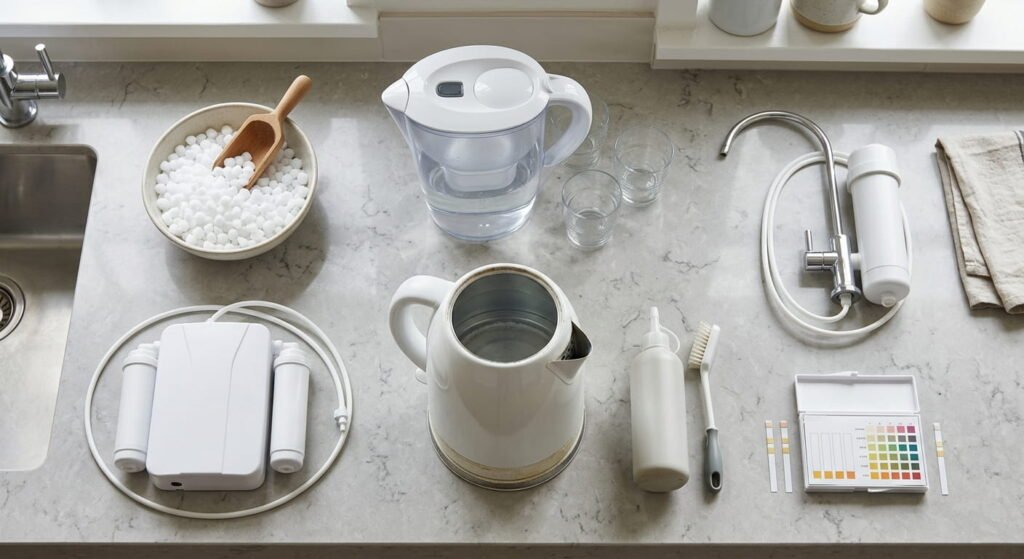
4. Which Method Actually Softens Hard Water?
This is one of the most important questions to answer.
Not every limescale product is a water softener.
| Method | Actually reduces hardness? | Whole-home potential | Main limitation |
|---|---|---|---|
| Ion-exchange softener | Yes | Yes | Requires installation, salt, and maintenance |
| Boiling | Some temporary hardness | No | Doesn’t remove permanent hardness |
| Some jug filters | Some temporary hardness | No | Limited capacity and treatment |
| Magnetic/electronic conditioners | No | Potentially | Do not remove calcium and magnesium |
| Reverse osmosis | Yes, through membrane treatment | Usually not the simplest choice | Waste stream and installation considerations |
| Descaling products | No | No | Removes existing scale only |
| Point-of-use treatment | Depends on technology | Limited | Treats selected outlets only |
The key distinction is between softening and conditioning.
The DWI defines softening as reducing hardness, including calcium and magnesium, through processes such as precipitation or ion exchange. It also notes that some conditioners modify hardness compounds without actually removing calcium and magnesium.
If you specifically want to reduce water hardness, look for a treatment method that genuinely addresses the hardness minerals.
5. Water Softener vs Water Filter: What’s the Difference?
This is one of the most common areas of confusion.
A water filter and a water softener can have completely different jobs.
A filter may be designed to improve:
- Taste
- Odour
- Particles
- Certain contaminants
- Specific water-quality characteristics
A water softener is specifically designed to reduce hardness.
Domestic ion-exchange softeners work by exchanging calcium and magnesium for sodium.
A simple way to remember it
Filter:
“What’s in my water that I want to reduce?”
Softener:
“How can I reduce the hardness minerals causing scale?”
Some products combine different technologies, so always check the exact specifications rather than relying on the product category or marketing language.
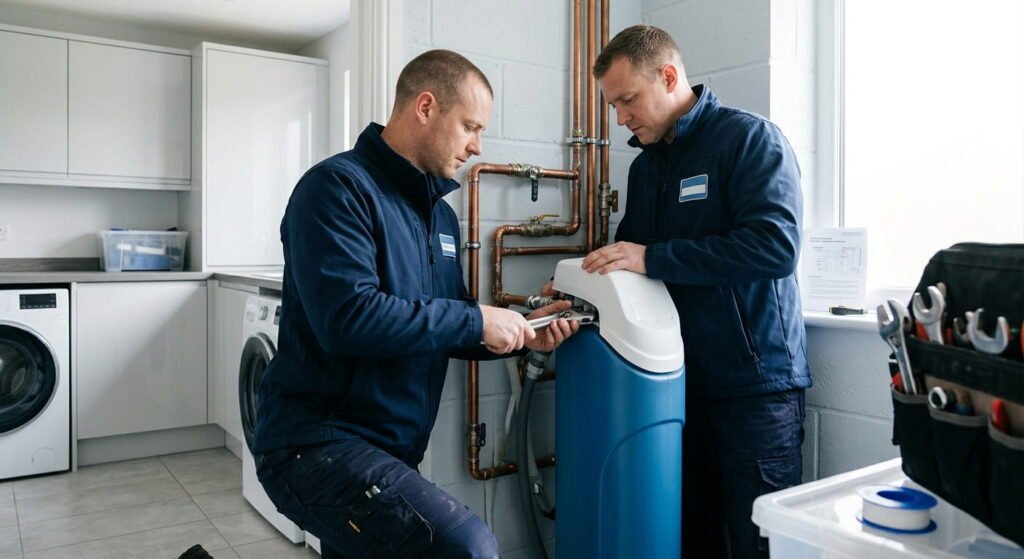
6. Can You Soften Hard Water Without a Water Softener?
Yes—but there is an important distinction between reducing some hardness and softening water throughout your home.
- Boiling can reduce temporary hardness.
- Some jug filters containing ion-exchange resin can affect temporary hardness.
- Reverse osmosis can reduce dissolved minerals at the point of treatment.
But if you want a dedicated system designed to treat hard water throughout a household, an ion-exchange water softener is the most directly relevant domestic technology.
The DWI identifies ion exchange as a common domestic water-softening method.
So before choosing a cheaper or simpler alternative, ask yourself:
Do I want to manage limescale in one place, or do I want to address hard water across my home?
That one question can make your options much clearer.
7. How to Choose the Right Hard-Water Solution for Your Home
Choosing a water-treatment system shouldn’t be about buying the biggest or most expensive product.
Start with your actual problem.
Step 1: Find out how hard your water is
Your local water supplier can provide information about your water quality and hardness.
The DWI recommends contacting your water company for a drinking-water quality report before purchasing treatment equipment.
You can also use water-hardness information to understand whether you’re dealing with slightly hard, hard, or very hard water.
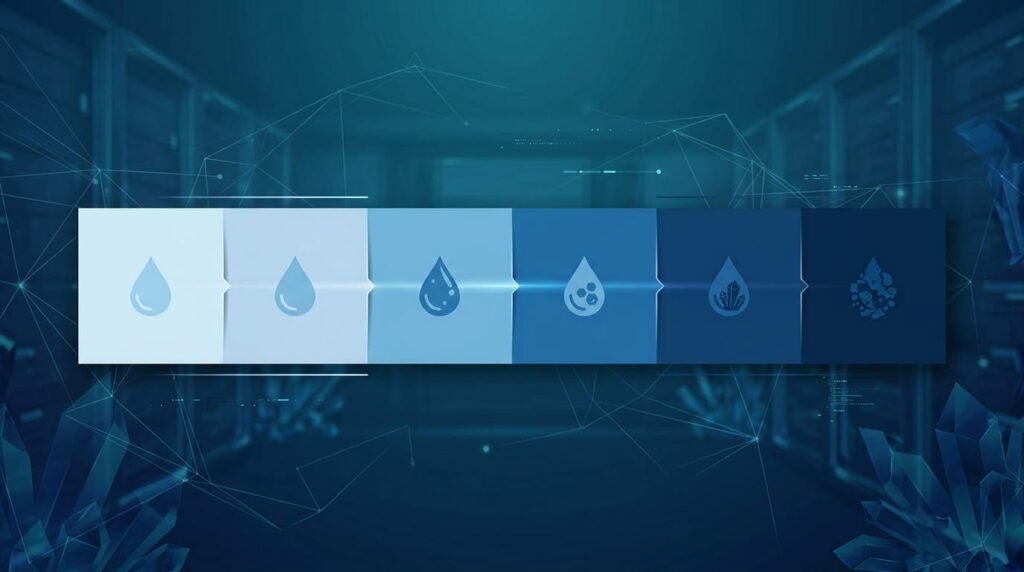
The DWI’s classification for water hardness includes:
- Up to 50 mg/L as CaCO₃: soft
- 100–150 mg/L: slightly hard
- 150–200 mg/L: moderately hard
- 200–300 mg/L: hard
- More than 300 mg/L: very hard
Step 2: Decide what you actually want to solve
Are you mainly concerned about:
- A limescale-covered kettle?
- Bathroom cleaning?
- Shower screens?
- Appliance scale?
- Hot-water systems?
- Soap not lathering well?
- Hard water throughout the property?
Your answer will influence the type of treatment worth considering.
Step 3: Consider household size and water use
A small household may have different requirements from a large family.
A suitable softener needs enough capacity for the property’s water demand and hardness level.
Step 4: Think about installation
Whole-home water treatment isn’t simply a case of placing a device next to a sink.
Plumbing configuration, drainage, electrical requirements, water pressure, and installation regulations can all matter.
The DWI recommends qualified installation and checking that products comply with relevant water-fittings requirements.
Step 5: Don’t forget maintenance when taking steps to protect your home.
A water softener is not a “fit it and forget it” appliance.
Depending on the system, you may need to:
- Refill salt
- Clean or service components
- Check settings
- Monitor performance
- Follow manufacturer maintenance instructions
The DWI cautions that ineffectively operated water-treatment facilities may create deposits, which could be a health risk.
8. UK Considerations Before Installing a Water Softener
UK homeowners should pay particular attention to how softened water is supplied around the property.
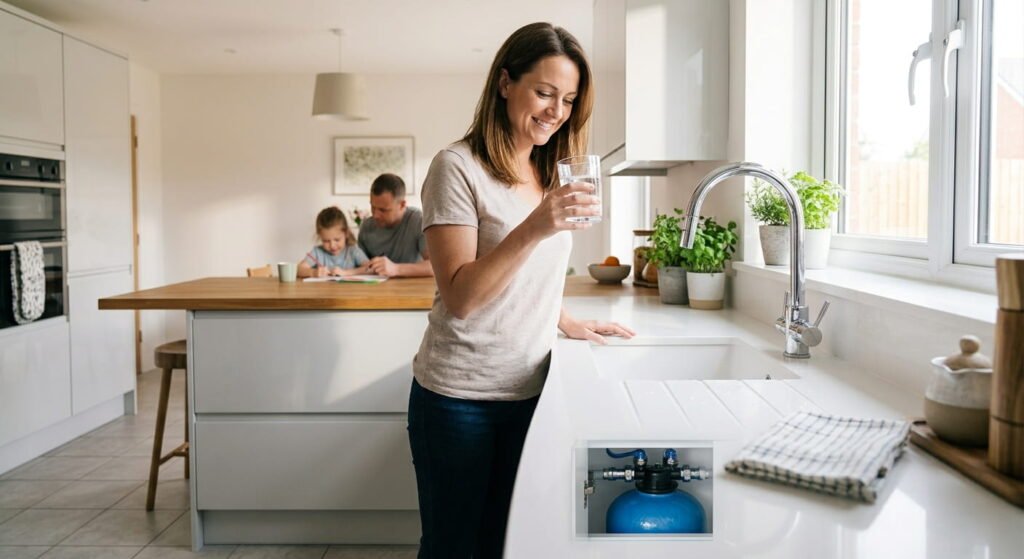
Keep an appropriate unsoftened drinking-water supply.
DWI has stated that when drinking water treatment systems are not properly maintained, they may experience scale buildup and could pose a risk to human health through contamination.
This is especially important for households where sodium intake needs to be restricted.
Artificially softened water should also not be used to prepare baby feeds according to DWI guidance.
Choose compliant equipment
The DWI advises consumers to ensure water-treatment products comply with applicable water-fittings requirements and to use reputable suppliers.
Use qualified installation
Correct installation matters because an incorrectly installed treatment system can create plumbing and water-quality problems.
The DWI recommends using a qualified plumber and following manufacturer instructions for installation and maintenance.
9. Water Softening Mistakes
Mistake #1: Thinking all filters soften water.
It’s always a good idea to see exactly what technology is removing from your water.
Mistake #2: Confusing the removal of limescale from water with the process of making water “soft.”
Existing deposits can be removed; however, this does not affect how hard the new water entering your system will be.
Mistake 3: Believing boiling solves all hard-water problems
Boiling can affect temporary hardness, but permanent hardness isn’t removed simply by boiling.
Mistake 4: Assuming magnetic devices remove hardness
The DWI says that magnetic devices will never soften water, as long as it has no changes in the chemicals that make up the water.
Mistake 5: Installing a softener without considering drinking water
Ion exchange softeners may cause increases in the amount of sodium present in treated water. Therefore, proper unsoftened drinking-water arrangements should be made.
Mistake 6: Ignoring maintenance
Even a sophisticated system needs appropriate care.
Follow the manufacturer’s suggested maintenance program and change consumable parts as necessary.
10. Myths & Facts on Hard Water
Myth: Boiling removes minerals that cause “hard” water to become “soft.”
Fact: Although boiling may reduce temporary water hardness, it will not remove permanent water hardness.
Myth: Limescale removers make water soft.
Fact: A descaler removes existing deposits. It does not reduce the calcium and magnesium entering your home.
Myth: ALL Water Filters Remove Hardness
Fact: Different filters have different purposes. Some may reduce certain forms of hardness, while others do not.
Myth: A magnetic conditioner is the same as a water softener
Fact: The DWI says magnetic devices do not actually soften water because they do not remove calcium and magnesium.
Myth: Hard water means unsafe drinking water
Fact: Water hardness itself is not treated as a health-based drinking-water standard in UK regulations. The issue for many households is scale and water behaviour rather than basic potability.
11. FAQs
How do you find the best method for removing the hardness from your water?
For whole-home domestic water softening, an ion-exchange water softener is a well-established approach. It reduces calcium and magnesium through ion exchange.
Can I soften hard water naturally?
The best way to soften hard water in a home is through professional installation of a water softener system. Temporary hardness may be reduced by boiling the water; however, boiling will not eliminate permanent hardness from the water supply.
Does boiling water remove limescale?
Boiling can cause some hardness minerals to precipitate, but the resulting mineral deposits can remain inside the kettle. It is therefore not a whole-home limescale solution.
Do water filters soften hard water?
Some filters containing ion-exchange resin can affect certain forms of hardness, particularly temporary hardness. However, many ordinary filters are not designed to soften water.
Are calcium and magnesium removed by a water softener?
An ion-exchange softener reduces calcium and magnesium by exchanging these ions for sodium ions.
Does a water softener remove existing limescale?
No. A water softener treats the incoming water to reduce hardness. Existing limescale deposits still need to be cleaned or descaled separately.
Can I drink softened water?
This depends on the installation and the system. UK Drinking Water Inspectorate guidance recommends maintaining an unsoftened kitchen supply for drinking and cooking when using an ion-exchange softener because softening can increase sodium levels.
Is hard water bad for washing machines and dishwashers?
Hard water can contribute to scale formation, particularly where water is heated. Reducing hardness can therefore help manage scale in domestic appliances.
How do I know if my water is hard?
Start by checking your local water supplier’s water-quality information. Your supplier can provide information about the hardness of your local supply, and the DWI recommends obtaining a water-quality report before purchasing home treatment equipment.
Is a water softener worth it?
It depends on your household and priorities.
If hard water is causing persistent limescale, increased cleaning, appliance-scale concerns or other everyday frustrations, a properly selected and installed softener may be worth considering.
However, installation cost, salt use, maintenance and drinking-water arrangements should all be considered before making a decision.
12. How to Reduce Limescale While You Decide
If you’re not ready to install a water softener, there are still practical ways to manage the effects of hard water.
Clean deposits regularly
Don’t allow limescale to build up for months before dealing with it.
Regular cleaning can make deposits easier to remove.
Descale your kettle
If your kettle develops visible scale, follow the manufacturer’s recommended descaling method.
Clean showerheads
Showerheads can accumulate mineral deposits that affect water flow.
Dry bathroom surfaces
Wiping water from taps and shower screens can reduce the amount of mineral residue left behind as water evaporates.
Maintain appliances
Follow manufacturer recommendations for cleaning and descaling appliances that are exposed to hard water.
These steps won’t soften the water, but they can make the daily battle with limescale far more manageable.
13. What Is the Best Solution for Your Home?
There is no single answer for every household.
If your problem is limited to a kettle, a suitable filter or regular descaling may be enough.
If you’re concerned about a particular drinking-water outlet, point-of-use treatment may be worth exploring.
If your entire home is affected by hard water and you want to reduce calcium and magnesium across multiple outlets, a properly installed ion-exchange water softener deserves serious consideration.
The key is to start with the problem rather than the product.
Ask:
- How difficult is it to remove minerals from my water?
- Where am I experiencing the biggest problems?
- Do I want to remove hardness or control limescale?
- Do I need treatment throughout the house or at one outlet?
- What installation and maintenance will the system require?
- How will drinking and cooking water be supplied?
Answering these questions can prevent you from spending money on a system that doesn’t actually solve the problem you’re trying to fix.
Conclusion: Find the Right Way to Tackle Hard Water
Hard water doesn’t have to become an endless cleaning battle.
From simple descaling and boiling to filters, point-of-use treatment, and whole-home water softeners, there are several ways to manage its effects. The important thing is understanding what each method actually does.
The use of boiling as a means to temporarily treat hardness is effective; however, other methods of treating hard water exist, such as filtering for targeted treatment of the water, descaling to eliminate existing scale formations, and the application of physical conditioners, which will affect the formation of scale but do not actually eliminate the hardness-causing minerals. Finally, the use of an ion exchange water softener is a true method for reducing calcium and magnesium from the household water supply.
For UK homeowners dealing with persistent limescale throughout their property, a properly selected and installed water softener can be a powerful option to consider.
Before buying, check your local water hardness, understand the treatment technology, compare installation and maintenance requirements, and make sure your drinking-water arrangements are appropriate.
The smartest solution isn’t necessarily the most complicated one.
It’s the one that actually addresses the cause of your hard-water problem.
Final Takeaway
If you remember only one thing from this guide, remember this:
Limescale removal and water softening are not the same thing. If you want to reduce water hardness genuinely, look for a treatment process that addresses calcium and magnesium—most commonly ion exchange in a domestic water softener.
That simple distinction can help you make a more confident, informed, and effective choice for your home.
Source:
1:https://www.dwi.gov.uk/consumers/learn-more-about-your-water/domestic-water-filters-and-softeners
2:https://www.dwi.gov.uk/consumers/learn-more-about-your-water/water-hardness-hard-water