Is Your Softener Working Efficiently? Water Softener Regeneration: 7 Key Facts
Short answer: Water softener regeneration is the cleaning cycle that flushes trapped limescale minerals out of the resin and recharges it with salt brine, so your softener keeps delivering soft water. Most homes regenerate every few days to once a week, usually at night, but the exact timing depends on your water hardness, usage and softener size.
If you own a salt-based softener, or you’re thinking of buying one, understanding regeneration helps you save salt, save water and spot problems early. This guide explains it in plain English.
Key Takeaways
- Regeneration is normal. It’s the routine cycle that flushes trapped calcium and magnesium out of the resin with salt brine, so your softener keeps working.
- The cycle has five stages: service, backwash, brine draw, rinse and brine tank refill. The control valve runs it automatically.
- There’s no universal frequency. Many UK homes regenerate every few days to about once a week, depending on water hardness, household usage and softener capacity.
- It usually runs at night because water demand is lowest then. A cycle typically takes one to two hours.
- Metered softeners are more efficient. They regenerate only after a set volume of water is used, while timed units run on a schedule even if capacity is left.
- Salt and water use vary by model. A rough guide is 1-3 kg of salt and tens to over a hundred litres of water per cycle, so check your manual for the real figures.
- More salt doesn’t mean softer water. Use the type your manufacturer recommends, and don’t copy a neighbour’s settings.
- Frequent regeneration signals a problem. Check hardness and capacity settings, look for leaks, and consider a faulty meter or control valve. Adding more salt only masks the issue.
- Softeners add a small amount of sodium. The UK limit for drinking water is 200 mg/L, so keep an unsoftened mains-fed kitchen tap for drinking and cooking.
- A softener isn’t a filter. It removes hardness minerals, not other contaminants.
- Install it properly. Use a reputable supplier and a qualified plumber (the WaterSafe register lists approved ones), and follow the Water Fittings Regulations.
- Start with your manual. Most problems come down to settings and are easy to fix, and a qualified engineer can help if you’re in doubt.
Table of Contents
What is water softener regeneration?
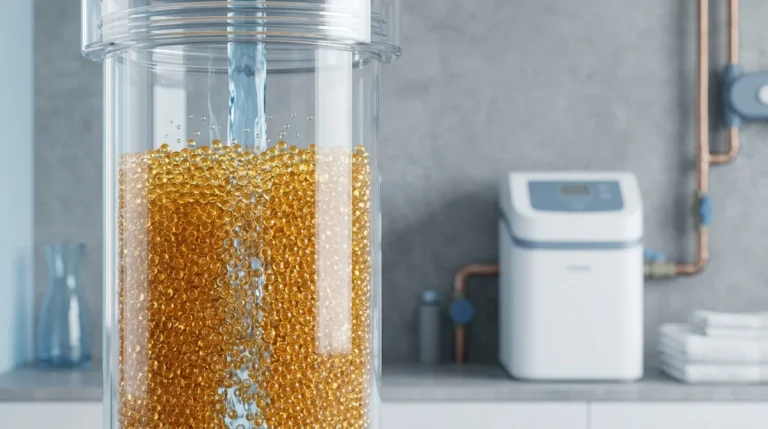
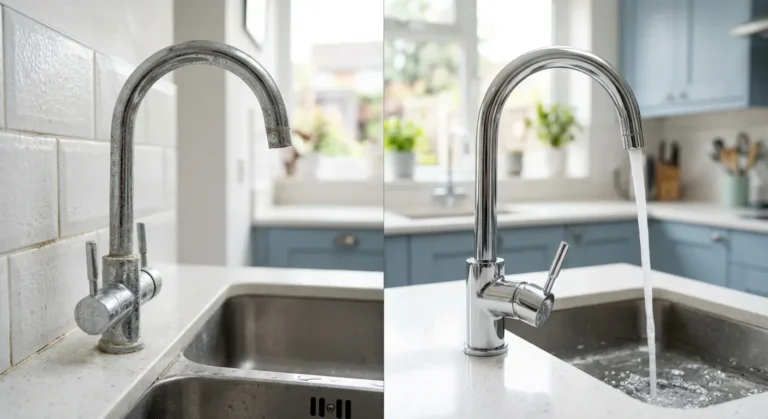
Inside your softener is a tank of tiny resin beads. Think of them as a sponge for limescale. As hard water flows through, the resin swaps calcium and magnesium (the hardness minerals) for sodium. This is called ion exchange, and it protects your kettle, boiler, taps and skin.
But the sponge fills up. Regeneration restores it. A strong salt brine (sodium chloride) passes through the resin, pushes the calcium and magnesium off the beads and flushes them to drain. The resin is then ready to soften again.
Fact 1: Regeneration is normal, not a fault
A softener that regenerates is a softener that’s working. It’s routine maintenance, not a breakdown. Worry only if it happens far more often than it should (see Fact 7).
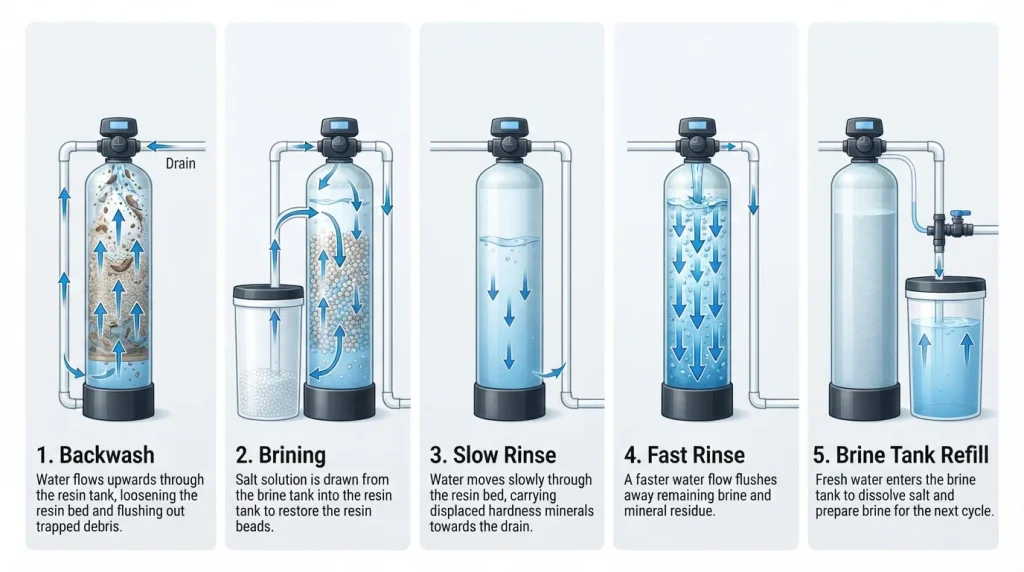
Fact 2: The regeneration cycle has five stages
The control valve runs the cycle automatically. Terms vary by manufacturer, but it generally goes like this:
- Service. Hard water passes through the resin and is softened.
- Backwash. Water flows upward through the resin to loosen the bed and flush out dirt.
- Brine draw. Salt brine flows through the resin, pushing hardness minerals off the beads.
- Rinse. Slow and fast rinses flush the brine and minerals to drain.
- Brine tank refill. The tank refills with water to dissolve salt for the next cycle.
Fact 3: How often should a water softener regenerate?
There is no universal number. Frequency depends on:
- Water hardness. Harder water exhausts the resin faster.
- Household water use. More people, showers and laundry mean more regeneration.
- Softener capacity. A larger unit goes longer between cycles.
- Control type. Metered or timed (see Fact 5).
Many households regenerate every few days to about once a week, but yours may differ. Check your manual and compare against your local hardness and usage.
Fact 4: Why do water softeners regenerate at night?
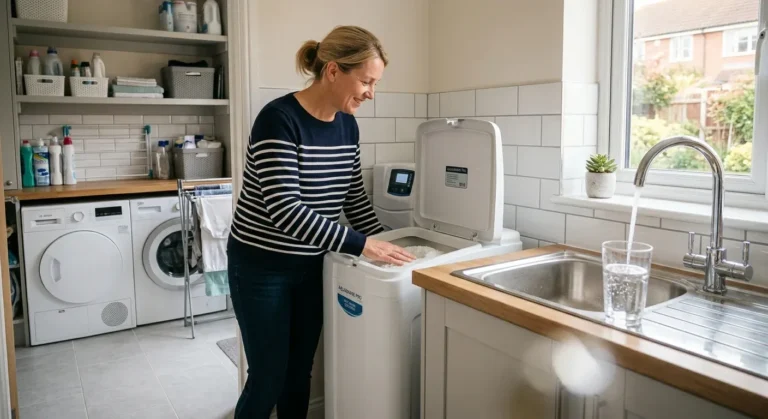
Because that’s when you’re least likely to need water. Regeneration usually runs in the small hours, so it doesn’t clash with showers or the washing machine. A cycle typically takes one to two hours, depending on the model.
Can I use water during regeneration? You can, but you’ll probably get hard or partly treated water, and mid-cycle use can interrupt the process. Check your manual.
Fact 5: Metered vs timed regeneration
| Metered (demand-based) | Timed | |
|---|---|---|
| Triggers when | A set volume of water has been used | A set day or schedule arrives |
| Efficiency | Higher: regenerates only when needed | Lower: may regenerate with capacity left |
| Best for | Households with varying water use | Very consistent usage |
| Salt and water waste | Lower | Potentially higher |
Many newer softeners are metered and use less salt and water than older timer-based units.
Fact 6: How much salt and water does regeneration use?
It varies with softener size, hardness and settings. As a rough guide, a typical domestic cycle uses around 1–3 kg of salt and tens to over a hundred litres of water. Your manual gives the real figures for your model.
- Use the salt type your manufacturer recommends (usually tablet or block salt made for softeners).
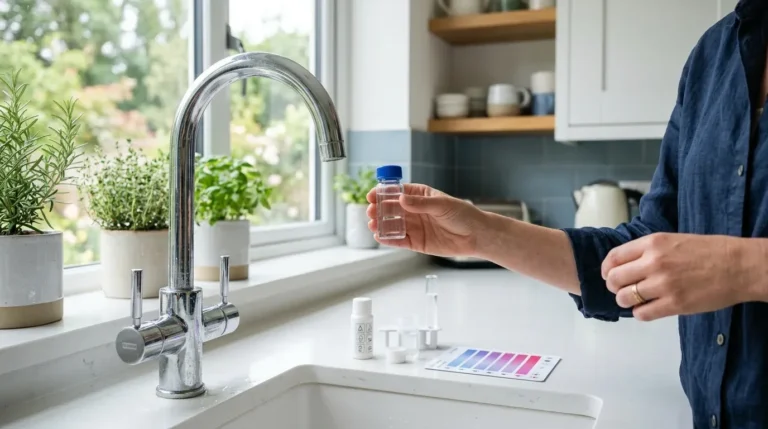
- Set the correct hardness level for your area.
- Don’t assume more salt means softer water. Excess salt wastes money without improving results.
- Don’t copy a neighbour’s settings. Their hardness, usage and unit will differ from yours.
Fact 7: Regenerating too often usually signals a problem
If your softener regenerates daily, it wastes salt and water and wears out faster. Common causes:
- Hardness setting too low, or capacity set too low
- A water leak (a running toilet or dripping tap counts as usage)
- Increased household water use
- A faulty meter or control valve
- Programming errors or problems with the cycle itself
Adding more salt won’t fix this and can hide the real issue. Check settings first, then look for leaks, then call the manufacturer or a qualified engineer.
Why hasn’t my softener regenerated?
- Is there power to the unit?
- Is the brine tank empty?
- Is the water supply on?
- Is the display showing an error code?
- Are the date and time set correctly?
- Has regeneration been switched off or delayed?
If none of these explains it, contact the manufacturer or your installer.
Should I regenerate my softener manually?
Most softeners are automatic, and many also have a manual regeneration button. It’s useful after a long absence, after refilling an empty salt tank, or when hard water symptoms return. Check there’s enough salt, follow your manual, and let the full cycle finish. Don’t change internal cycle or capacity settings unless you know what you’re doing.
Water softener myths vs facts
| Myth | Fact |
|---|---|
| Softeners regenerate every night | Only when needed (metered) or on the schedule you set (timed) |
| More salt means softer water | The correct type and amount of salt is what matters |
| All softeners regenerate the same way | Stages, timings, and salt and water use vary by model |
| A regenerating softener is broken | Regeneration is a normal, necessary part of operation |
| Softeners also filter water | They remove hardness minerals, not other contaminants |
UK considerations: sodium, drinking water and installation
- Ion-exchange softeners add a small amount of sodium to the water. The UK legal limit for sodium in drinking water is 200 mg/L.
- The Drinking Water Inspectorate (DWI) and industry guidance recommend keeping an unsoftened, mains-fed kitchen tap for drinking and cooking.
- Installations must comply with the Water Fittings Regulations. Use a reputable supplier and a qualified plumber.
- A softener isn’t a filter. If you’re concerned about water quality, ask your water company or test your supply.
Is your softener working efficiently? Quick checklist
- Regeneration is automatic and runs at a quiet time
- Hardness and capacity settings match your home
- Salt is topped up, using the recommended type
- Regeneration frequency is steady, not suddenly increasing
- No leaks, error codes or unexplained salt use
- Serviced as the manufacturer recommends
Buying a new softener? Compare these nine things
- How regeneration is triggered (metered is usually more efficient)
- Water used per regeneration
- Salt used per regeneration
- Capacity versus your household size
- Servicing and maintenance needs
- Warranty length
- Availability of spare parts and support
- Ease of installation
- Advanced control options
Frequently asked questions
What is water softener regeneration?
It’s the cleaning cycle that flushes trapped calcium and magnesium out of the resin using salt brine, so the softener can keep producing soft water.
How often should a water softener regenerate?
It depends on your water hardness, household water use and softener capacity. Many UK homes see a cycle every few days to about once a week.
How long does regeneration take?
Usually one to two hours, depending on the model. Check your manual for your unit’s exact cycle time.
Why do water softeners regenerate at night?
Water demand is lowest overnight, so the cycle doesn’t interrupt showers, laundry or other household use.
What happens during regeneration?
There are five stages. Hard water is softened in normal service, then the resin is backwashed. Salt brine is drawn through to remove hardness minerals, then the resin is rinsed. Finally, the brine tank refills.
Is it normal for a softener to regenerate?
Yes. Regeneration is routine maintenance, not a fault. A problem is more likely if the frequency suddenly increases.
Why is my water softener regenerating too often?
Common causes are incorrect hardness or capacity settings, a water leak (such as a running toilet), increased household water use, a faulty meter or control valve, or a programming error.
Should I add more salt if it regenerates frequently?
No. More salt doesn’t fix the cause and can hide a fault. Check the settings and look for leaks first.
Why hasn’t my water softener regenerated?
Check that it has power, the brine tank isn’t empty, the water supply is on, there’s no error code on the display, the date and time are correct, and regeneration hasn’t been switched off.
How much salt does a regeneration use?
It varies by softener size, water hardness and settings. A rough guide is 1–3 kg per cycle, but your manual gives the real figure for your model.
How much water does a regeneration use?
It also varies by model and settings, from tens to over a hundred litres per cycle. Metered softeners generally use less over time because they regenerate only when needed.
Can I use water while the softener is regenerating?
Often yes, but you may get hard or partly treated water, and using water mid-cycle can disrupt the process. Check your manual.
What’s the difference between metered and timed regeneration?
Metered units regenerate after a set volume of water has been used, which is more efficient. Timed units regenerate on a fixed schedule, even if capacity is left.
Do all water softeners regenerate automatically?
Yes, either on demand (metered) or on a schedule (timed). Many also have a manual regeneration button.
Can I regenerate my softener manually?
Many models allow it. It’s useful after a long absence, after refilling an empty salt tank, or when hard water symptoms return. Follow your manual and let the full cycle finish.
Does regeneration remove hardness from my water?
It removes hardness minerals from the resin, flushing them to drain. That restores the resin’s ability to soften your water.
Does more salt make softer water?
No. The correct type and amount of salt is what matters, and excess salt just wastes money.
What type of salt should I use?
Use whatever your manufacturer recommends, usually tablet or block salt made for water softeners.
Does a water softener add sodium to my water?
Yes, a small amount. The UK legal limit for sodium in drinking water is 200 mg/L, and guidance recommends keeping an unsoftened mains-fed kitchen tap for drinking and cooking.
Is a water softener the same as a water filter?
No. A softener removes hardness minerals, not other contaminants. If you’re concerned about water quality, test your supply or ask your water company.
Do I need a qualified plumber to install a softener?
It’s strongly recommended. Installations must comply with the Water Fittings Regulations, and the WaterSafe register lists approved plumbers.
Can I change the internal settings myself?
Only if you understand what you’re changing. Cycle and capacity settings vary by model, so check the manual or ask a qualified engineer.
Conclusion
Regeneration is the heart of how a salt-based water softener works. Brine flushes trapped calcium and magnesium out of the resin, rinses restore it, and your softener is ready to protect your pipes and appliances again. There’s no single correct regeneration frequency, salt dose or water use for UK homes: it all depends on your local hardness, household usage, softener size and control type.
Most problems come down to incorrect settings and are easy to fix. Start with your manual, and call a qualified engineer when in doubt.
Have a question about your softener’s regeneration? Leave a comment below or contact our team.
Sources:
1:https://www.amazon.co.uk/s?k=water+softener+salt+tablets&utm_source
2:https://www.amazon.co.uk/s?k=water+hardness+test+kit&utm_source