Enjoy Better Performance! Water Softener Maintenance: 7 Essential Tips

Quick answer: To maintain a water softener, check the salt level regularly, use the salt type your manufacturer specifies, look for salt bridges, understand the regeneration cycle, monitor water hardness, clean only as the manual allows, and book professional servicing when faults appear. Always follow your manufacturer’s instructions.
A water softener usually goes unnoticed until it starts behaving differently. Limescale returns on the taps, salt disappears faster than usual, or the system acts strangely. In most cases the cause is simple: low salt, a salt bridge or a missed regeneration cycle, and these are usually the result of missed maintenance.
The good news is that routine water softener maintenance is easy. It needs no technical skill and no dismantling. Homeowners can handle most regular checks, while a qualified professional should deal with more complicated faults.
The Drinking Water Inspectorate (DWI) advises users of domestic water-treatment equipment to follow the manufacturer’s maintenance instructions. Good maintenance helps you catch problems before they affect performance or water quality.
This guide covers seven key maintenance tips, how to tell if your softener is working, common faults and fixes, DIY versus professional care, and what UK homeowners need to know about drinking water.
Key Takeaways
- Check the salt level regularly and follow your manufacturer’s instructions.
- Use the salt type recommended for your specific softener.
- Inspect the brine tank for salt bridges and other problems.
- Understand your regeneration cycle and investigate unexpected changes.
- Monitor water hardness and limescale to spot performance problems early.
- Clean only with methods and products the manufacturer approves.
- Book professional servicing if you notice leaks, repeated faults or poor water quality.
- In UK homes with an ion-exchange softener, keep an unsoftened supply for drinking and cooking.
Table of Contents
What Counts as Water Softener Maintenance?
Water softener maintenance means regular inspections and routine care that keep the system performing well. It rarely involves complicated repairs. It is mainly a steady habit of checking the system’s condition and keeping it clean.
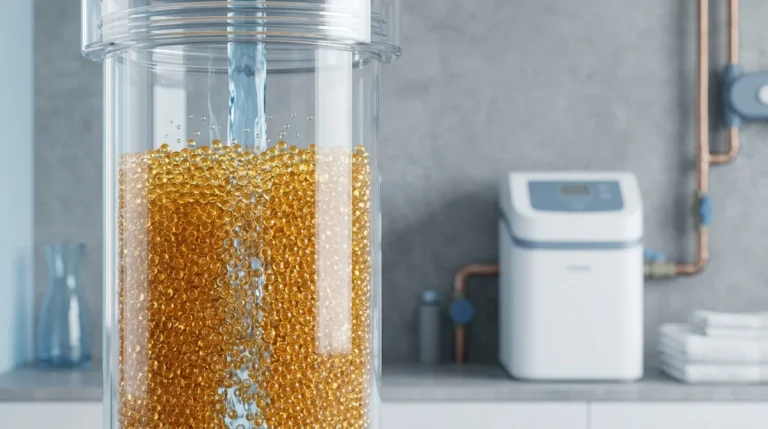
Most domestic softeners use ion exchange. Hard water contains dissolved calcium and magnesium, which cause buildup on screens, heating elements and other surfaces. Inside the softener, an ion-exchange resin captures these minerals and swaps them for sodium ions. When the resin is full, the system must regenerate: it passes a salt solution (brine) through the resin, rinses it, and returns to service.
Main parts of a water softener:
| Part | What it does |
| Salt supply | Provides the material used to make regeneration brine |
| Brine tank | Holds salt and water to prepare the brine |
| Resin bed | Carries out the ion exchange that reduces hardness |
| Control valve | Manages water flow and the regeneration process |
| Drain connection | Removes wastewater produced during regeneration |
If any one part fails, the softener may stop softening effectively. Regular maintenance lets you spot changes in salt use, regeneration or hardness early, before a small issue becomes a major one.
How Often Should a Water Softener Be Maintained?
There is no single schedule for every softener. The right frequency depends on the model, installation, incoming water quality, household usage and the manufacturer’s instructions. One manufacturer may recommend monthly salt checks, while another may suggest something different.
Use this table as a general guide only, not a substitute for your manual:
| Frequency | Recommended checks |
| Regularly | Check the salt supply and look for obvious leaks or unusual operation |
| Periodically | Inspect the accessible parts of the brine tank and watch system performance |
| As the manufacturer specifies | Clean components, service the unit and replace parts where needed |
| Whenever a problem appears | Check for unexpected hardness, salty taste, leaks or regeneration problems |
The golden rule: follow the schedule in your manufacturer’s manual. Softeners differ in cleaning method, salt quantity and servicing interval.
7 Essential Water Softener Maintenance Tips
Tip 1: Check Your Water Softener Salt Level Regularly

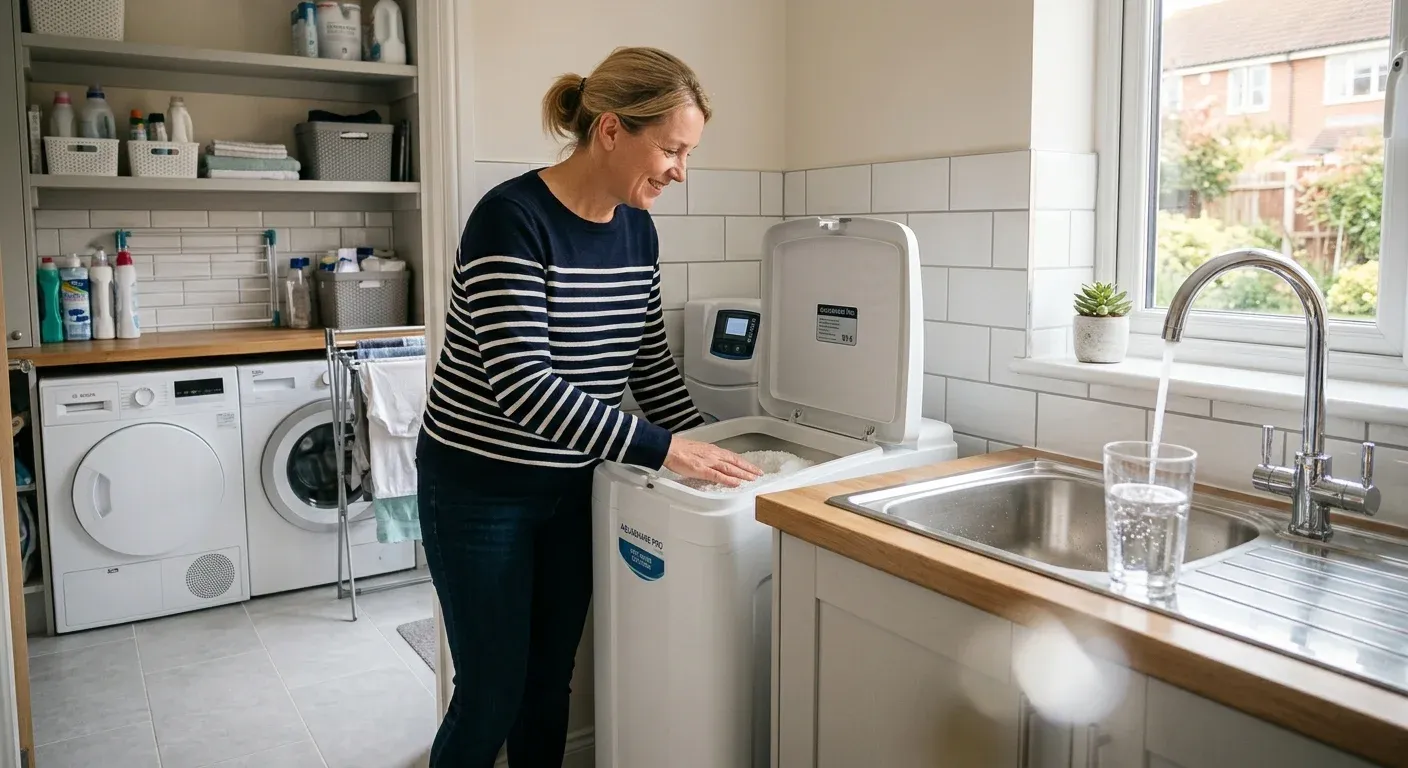
Checking the salt supply is one of the simplest and most important jobs for a salt-based softener. Salt makes the brine that restores the resin’s softening power during regeneration. If the supply runs low, the system may struggle to regenerate properly.
Filling the tank to the brim is not always right. Tank designs, recommended salt levels and filling methods vary, and overfilling is not appropriate for every model.
How to check the salt level:
- Read the manufacturer’s instructions for the correct checking method.
- Open the salt compartment or brine tank as directed.
- Confirm the salt is within the recommended range.
- Look for crusting, bridging or other visible problems.
- Add compatible salt if needed, following the instructions.
- Close the compartment securely and note anything unusual.
Pro tip: Set a monthly phone reminder to start with (if that suits your system), then adjust to your manufacturer’s advice and your household’s salt use. If salt consumption suddenly rises or falls, investigate the cause instead of just changing the settings.
Tip 2: Use the Correct Water Softener Salt

Not every salt works in every softener. The wrong product can cause unwanted deposits, operating problems or extra cleaning. Softener salt typically comes as tablets, pellets or other manufacturer-approved products, depending on your design.
Before buying salt, check:
- Whether your manufacturer specifies tablets, pellets or another form.
- That the product is intended for water-softening equipment.
- That it meets the manufacturer’s stated requirements.
- The packaging for any compatibility restrictions.
Do not assume table salt or rock salt is a suitable substitute. Some manufacturers advise against rock salt because insoluble material can build up in the brine tank. The right salt is not the cheapest or the one with the flashiest packaging. It is the one that meets your system’s requirements.
What happens if you use the wrong salt? Depending on the product and system, it may leave residue, interfere with brine preparation or increase cleaning needs. If you have already used an unsuitable product, contact the manufacturer before trying to remove deposits or dismantle anything.
Tip 3: Watch for Salt Bridging and Brine Tank Problems
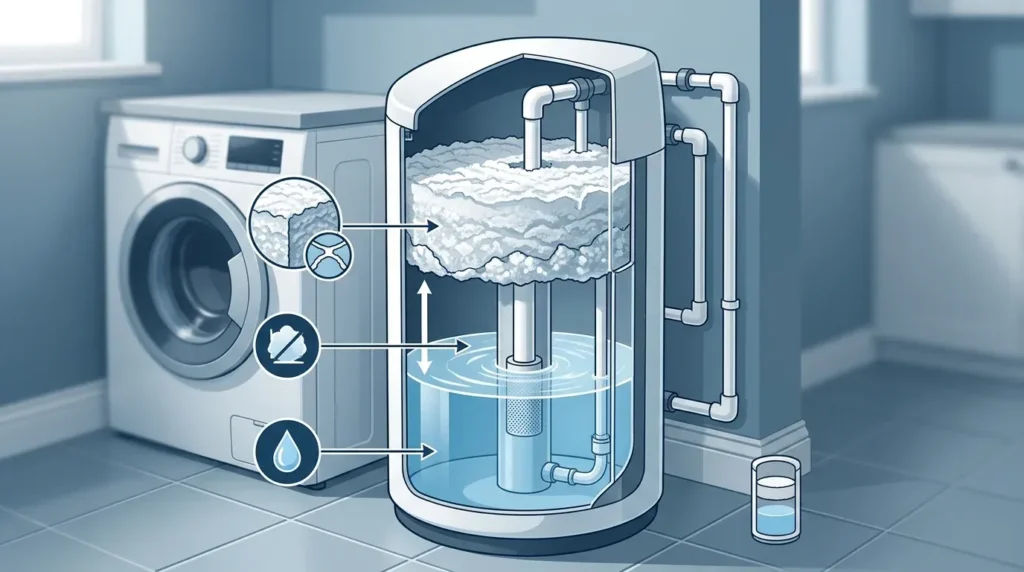
A salt bridge is a hardened crust of salt that forms in the brine tank, sometimes leaving an empty space underneath. It is deceptive: the tank looks full, but the salt may not be dissolving. The softener then cannot make proper brine, regeneration becomes ineffective and hard water can return.
Signs of a possible salt bridge:
- Salt that stays at the same level for an unusually long time.
- A softener that no longer reduces hardness as expected.
- Unexplained changes in salt consumption.
- Hardened material visible in the salt compartment.
- Other unusual conditions in the brine tank.
Humidity, salt type and equipment design can all affect the chance of bridging.
How to deal with a salt bridge: Do not poke, hammer or force the hardened salt. You could damage the tank, float, liner or other components. Instead:
- Check your manufacturer’s troubleshooting guide.
- Confirm whether a homeowner is allowed to intervene.
- Follow the approved procedure for your model.
- Arrange professional help if the bridge cannot be safely handled or the fault keeps returning.
Remember, a salt bridge is only one possible cause of poor softening, not proof that it is the only problem.
Tip 4: Understand the Regeneration Cycle

Regeneration is what keeps the ion-exchange resin reducing water hardness. Understanding it makes maintenance and troubleshooting far easier. Sequences vary by manufacturer, but a typical cycle looks like this:
- Backwash: Water flows through the resin bed to flush out accumulated material and prepare the resin.
- Brine draw: A salt solution is drawn from the brine system and passed through the resin to restore its ion-exchange capacity.
- Rinse: Water rinses away unabsorbed brine and displaced material.
- Return to service: The softener produces softened water again.
Your system may use different terms or extra stages, so follow your manual.
How often should a water softener regenerate? It depends on incoming water hardness, household water use, softener capacity, programming, salt dosage and the manufacturer’s control method. Some systems regenerate based on water usage, others on a time schedule. There is no single frequency for all UK households.
What if regeneration seems abnormal? Check the display and your manual. If the system keeps failing to regenerate, or produces hard or unusually salty water, arrange a proper assessment. Do not change regeneration settings to force more frequent cycles or to save salt. Incorrect settings can hurt performance even if they seem to fix one symptom for a while.
Tip 5: Monitor Water Hardness and Overall Performance

A softener can seem fine while its performance has quietly changed. Keeping an eye on your household water, and testing hardness when appropriate, is a useful part of maintenance.
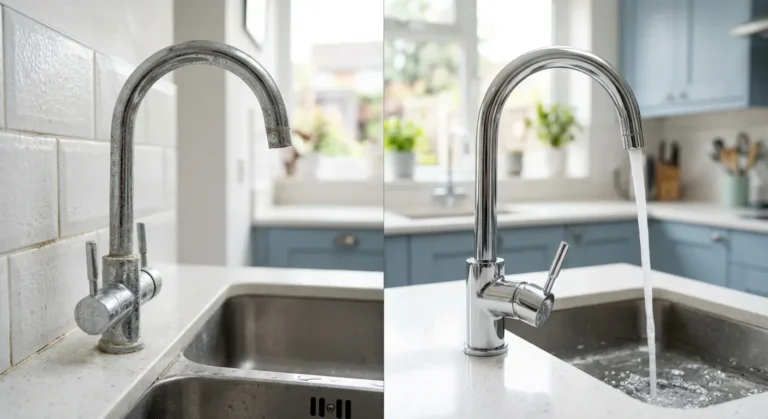
Watch for returning limescale. If limescale dropped sharply after installation, a gradual return may mean hardness is getting through. Inspect taps and shower fittings, shower screens, kettles and appliances, and places where water regularly evaporates. Existing deposits may linger after installation, so limescale alone is not a reliable measure of hardness. Treat it as a warning sign, not a diagnosis.
Test your water hardness. A suitable hardness test shows whether the softener is reducing hardness as it should. Follow the test kit instructions, and sample from the correct outlets when comparing incoming and softened water. A hardness test does not show every aspect of water quality, and it cannot prove water is free from contaminants.
Monitor salt consumption. Unexpected salt use is another clue. If your softener regenerates more often, it may use more salt. This could come from higher household water use, a change in incoming hardness, altered settings or a performance fault. Rather than assuming the system just needs more salt or a new part, investigate the change.
It helps to keep short records of salt top-ups, hardness tests and any irregularities. This makes it much quicker for a professional to diagnose recurring problems.
Tip 6: Clean Your Water Softener Only as Recommended
Cleaning matters, but there is no universal method. Some softeners are cabinet-style, others have separate brine tanks and resin vessels, and their maintenance needs differ widely. The safest approach is to follow your manufacturer’s cleaning instructions.
General preparation checklist:
- Follow the manufacturer’s cleaning instructions.
- Work out which parts homeowners can clean.
- Check for any specified cleaning products.
- Follow the stated procedure and safety precautions.
- Complete any restart, rinse or regeneration steps.
- Confirm the system operates normally again.
Avoid harsh chemicals, household cleaners or unapproved additives unless the manufacturer says they are suitable.
Should you clean the brine tank? Over time, unwanted material can build up in some brine tanks. Some models call for regular cleaning, others have different arrangements. Check that the tank is intended for homeowner maintenance and that the manufacturer gives a specific procedure. Take extra care around floats, valves and internal parts.
Should you clean the resin tank? Not as a routine DIY job unless the manufacturer says so. Regeneration normally keeps the resin bed in good condition. If you suspect contamination, fouling or a component fault, get advice from the manufacturer or a qualified water-treatment professional.
Tip 7: Schedule Professional Servicing When Needed

Homeowner checks help you spot problems early, but they cannot replace professional servicing. A skilled engineer can inspect parts of the system that are not accessible or suitable for homeowners.
A service may include checks of:
- Control-valve operation
- Regeneration performance
- Brine-system operation
- Accessible plumbing connections
- Drainage arrangements
- Settings and programming
- Parts that need testing or replacing
Does a water softener need servicing every year? Not necessarily. Some manufacturers or installers suggest annual servicing, others recommend different intervals. Follow the servicing instructions for your own equipment. Professional servicing is especially worthwhile if your system is old, has a history of faults or has recurring problems.
Call a professional if you notice:
- Hard water even though the salt level is good
- Repeated regeneration failures
- Strongly salty or unusual-tasting water
- Leaks from the unit or its connections
- Unexplained changes in water flow
- Unusual mechanical noises
- Any issue that needs dismantling or specialist testing
If your water suddenly tastes unusual or shows another worrying change, do not just carry on until the next service. Follow the manufacturer’s advice and get professional help.
How to Check Whether Your Water Softener Is Working
Once you have a routine, learn what normal operation looks like. A working softener should operate as designed and reduce hardness to the level normal for that system.
| What to check | What it tells you |
| Is there enough salt for regeneration? | Whether the system can regenerate properly |
| Water hardness results | Whether the softener is managing hardness as it should |
| Returning limescale | A possible sign hardness is coming back (not conclusive on its own) |
| Salt consumption | Whether usage has changed unexpectedly |
| Regeneration status | Whether the system finishes its programmed cycle |
| Leaks | Whether a closer inspection is needed |
When a check shows a problem, investigate the symptom before changing anything. Returning hard water does not automatically mean the resin needs replacing. The cause could be the salt supply, bridging, settings, regeneration, installation or another component. A systematic approach prevents unnecessary repairs.
Common Water Softener Maintenance Problems and Solutions
Even a well-maintained system can go wrong. Recognise the symptom, consider the possible causes, then choose a sensible next step.
| Problem | Possible causes | Recommended action |
| Water is still hard | Low salt, salt bridging, regeneration problem, wrong settings | Check the salt level and the manufacturer’s troubleshooting guide |
| Strong salty taste | Regeneration, rinsing, drainage or valve problem (other causes possible) | Treat as abnormal and get professional advice |
| Salt bridge | Hardened salt stopping proper brine formation | Follow the approved procedure for your model |
| Softener not regenerating | Settings, control or component fault | Check the display and manual, then call a professional if needed |
| Using too much salt | More water use, more frequent regeneration, changed settings or a fault | Check usage and programmed settings without changing them blindly |
| Leaks | Connections, valves, tanks or plumbing | Follow manufacturer safety instructions and arrange repair |
| Poor water flow | Plumbing, pressure or equipment restrictions | Investigate the cause if simple checks do not help |
| Limescale still appears | Remaining deposits, unsoftened outlets or inadequate softening | Check the outlet and carry out a hardness test if needed |
These are possible causes, not definite diagnoses. Different softeners can show the same symptom for different reasons.
Why Is My Water Softener Using So Much Salt?
High salt use does not always mean a fault. Before assuming there is one, consider whether:
- Household water use has gone up.
- More people are living in the property.
- The hardness of the incoming water has changed.
- The system is regenerating more often.
- The settings have changed.
- The equipment is behaving differently from normal.
If none of these explains it, contact the manufacturer or arrange a professional service. Cutting salt use will not lower running costs if the system is then set up incorrectly and fails to soften properly.
Water Softener Maintenance Before Winter
If your softener sits in a garage, outbuilding or other place that can get very cold, consider freezing risk. Freezing can damage the equipment and connected pipework. Before winter, check the manufacturer’s temperature requirements and assess whether the installation could be exposed to frost. If the property will be empty for a long time, follow the approved shutdown and restart procedures. Simply switching the system off is not enough.
DIY vs Professional Water Softener Maintenance
The best approach combines regular homeowner checks with professional servicing for technical or complex tasks.
| Homeowner tasks | Professional tasks |
| Check the salt level | Test salt concentrations and diagnose internal valve problems |
| Use the recommended salt | Confirm technical specifications |
| Look for visible leaks | Repair leaks and faulty connections |
| Monitor performance and regeneration | Test regeneration operation in depth |
| Follow approved cleaning instructions | Carry out technical repairs |
| Perform recommended hardness tests | Solve more complex water-treatment problems |
The boundary is clear: only do what the manufacturer allows and clearly describes. If a job involves dismantling equipment, specialist testing or plumbing alterations, use a competent professional.
Water Softener Maintenance in the UK: Drinking-Water Considerations

For UK homeowners, looking after a softener also means knowing which outlets deliver softened water and which deliver unsoftened water.
Conventional ion-exchange softeners replace calcium and magnesium ions with sodium ions, so the sodium level in treated water rises. The increase depends on the hardness of the incoming water and how the softener operates.
The Drinking Water Inspectorate recommends keeping an unsoftened supply for drinking and cooking when a domestic ion-exchange softener is in use. It also states that artificially softened water should not be used to prepare baby feeds.
Installation matters as much as routine maintenance. If you are unsure whether your kitchen tap supplies softened water, ask your installer or a qualified plumber to check the plumbing set-up. For more detail, see the DWI’s resource guide on domestic water filters and softeners.
Water Softener Maintenance: Myths vs Facts
| Myth | Fact |
| A water softener needs no maintenance | Salt-based systems need regular checks and maintenance |
| More salt always means better performance | The correct salt level and correct settings matter more than extra salt |
| If the salt tank is full, the softener is working | A salt bridge or another fault can still stop it working |
| All softeners regenerate at the same frequency | Frequency depends on the model, settings, water use and other factors |
| All softeners need the same cleaning method | Cleaning needs vary by manufacturer and design |
| Hardness testing is the only way to check performance | It is very useful, but also watch salt use, regeneration and limescale |
| A salty taste is normal because softeners use salt | A very strong salty taste may signal a problem and should be investigated |
| Every softener needs servicing once a year | Follow the schedule recommended for your system |
| Homeowners should dismantle the unit to clean it | Only carry out maintenance the manufacturer allows |
Understanding these differences saves wasted effort and helps you spot genuine problems.
Frequently Asked Questions
How often should I check the salt in my water softener?
Check at the intervals your manufacturer suggests. Some systems call for monthly checks, while others differ. Follow the instructions for your specific system.
What is the most important part of water softener maintenance?
No single task suits every system. For many salt-based softeners, routine maintenance means checking the salt supply, looking for bridging, watching the regeneration process and following the manufacturer’s instructions.
How do I know if my water softener is working?
Where appropriate, monitor water hardness, confirm regeneration happens as it should, and watch for changes in limescale or salt use. A suitable hardness test can confirm the system is reducing hardness effectively.
How do I clean a water softener?
Follow the cleaning procedure for your model and use only approved products and methods. Do not disassemble internal components unless the manufacturer specifically tells you to.
How can I prevent salt bridging?
Use compatible salt, follow the manufacturer’s filling instructions and inspect the tank as advised. If you suspect a bridge, use the approved method for your system rather than forcing the hardened salt apart.
Why is my water softener using so much salt?
Possible reasons include higher water use, changes in incoming hardness, frequent regeneration, incorrect settings or an equipment fault. If the change remains unexplained, check normal operation for your system and get professional advice.
Does a water softener need servicing every year?
Not necessarily. The right interval depends on the manufacturer, model and installation. Follow the recommended timetable and get professional servicing when needed or when problems occur.
Why does my softened water taste salty?
A strong salty taste is not something to accept as normal. Check the manufacturer’s troubleshooting instructions and seek professional advice. Causes can include regeneration, rinsing, drainage or valve problems, but the taste alone does not identify the fault.
Can I maintain my water softener myself?
Yes, for simple checks and routine work approved by the manufacturer. Technical repairs, work on internal components or plumbing changes should be done by a qualified professional.
Does my kitchen tap deliver softened water?
The DWI recommends that UK homes with a domestic ion-exchange softener keep an untreated supply for drinking and cooking. If you are unsure about your set-up, ask your installer or a qualified plumber to check.
What happens if I don’t maintain my water softener?
Salt shortages, bridging and other problems can go unnoticed. The system may lose performance, use salt inefficiently or need more extensive repairs.
How long will my water softener last?
There is no fixed answer, but good care extends its life: follow the manufacturer’s instructions, use compatible salt, monitor performance and respond quickly to anything abnormal. Consistency and vigilance are key.
Final Thoughts

Start with these seven tips:
- Check the salt supply regularly.
- Use the correct salt for your system.
- Watch for salt bridges and brine tank problems.
- Understand the regeneration cycle.
- Monitor water hardness and overall performance.
- Clean only in line with the manufacturer’s guidelines.
- Arrange professional servicing when needed.
These habits help you catch problems early and keep your softener running efficiently.
For UK homeowners, installation matters too. Always keep unsoftened water for drinking and cooking, as the Drinking Water Inspectorate recommends, and if you are unsure about your set-up, consult a competent professional. Above all, treat your own manufacturer’s manual as the main reference. General guides explain how softeners work but cannot replace instructions written for your specific model.
Had a problem with your water softener, or found a fix that worked? Share it in the comments so other readers can learn from your experience.
Need help? [Book a water softener service with us] or [Ask our team a question].
Affiliate Disclosure: This article contains affiliate links. If you purchase through these links, AquaClariX may earn a commission at no extra cost to you.
1:https://www.amazon.co.uk/s?k=water+hardness+test+kit&utm_source
2:https://www.amazon.co.uk/s?k=water+softener+resin+cleaner&utm_source