
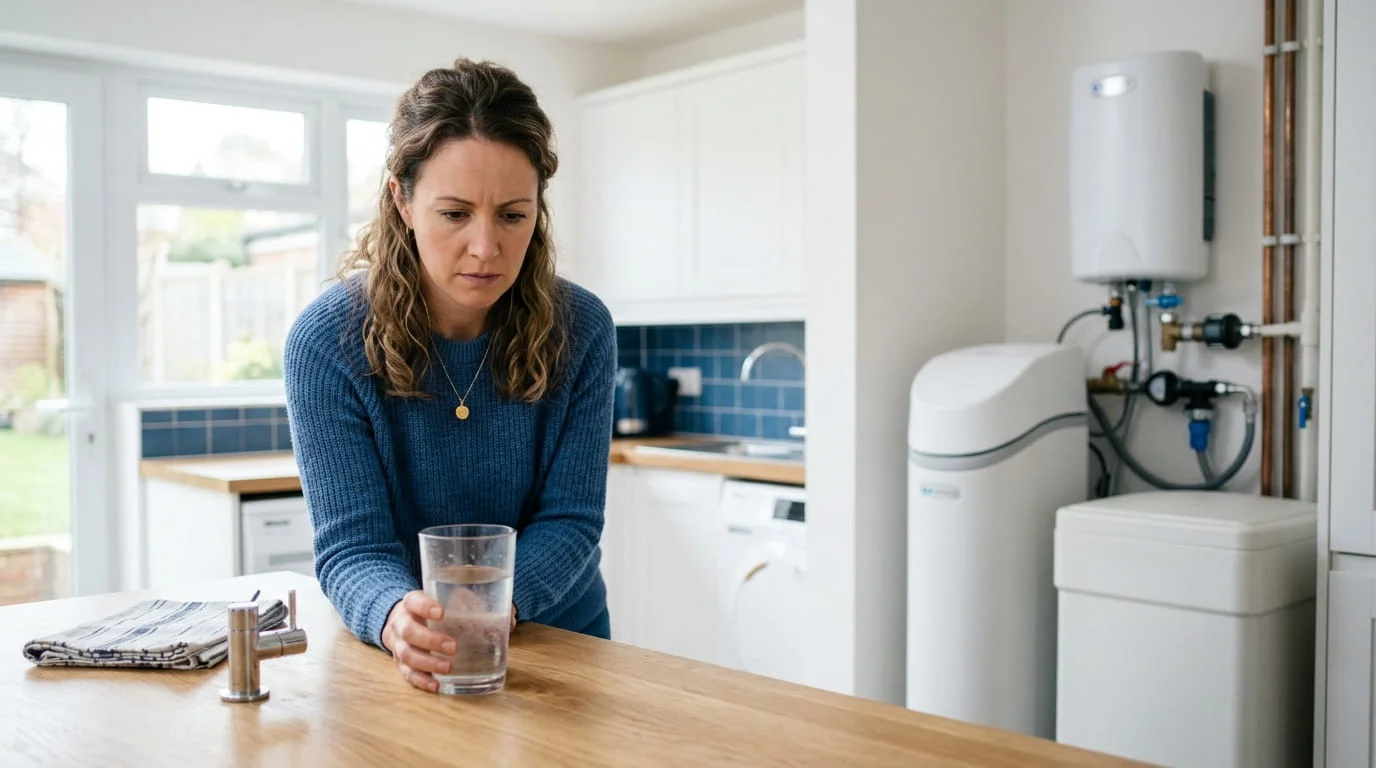
Stop Salty Water! 7 Causes & Fixes for Water Softener Salty Water
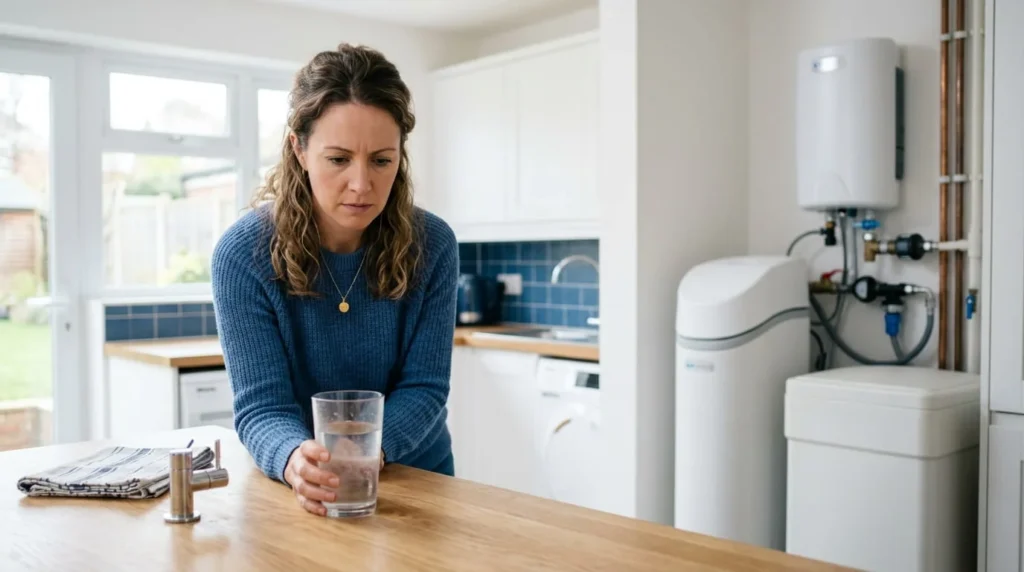
Water Softener Salty Water? Have you noticed a salty taste in your tap water even though your water softener is supposed to improve it? Discover why it happens and how to fix it, even when your system appears to be working normally.
Quick Answer
Why does my water softener make my water taste salty? The most common causes are an incomplete regeneration or rinse cycle, a blocked drain line, a brine-draw problem, incorrect settings, water-pressure or flow issues, a faulty control valve or internal component, or a taste that comes from elsewhere in your plumbing or water supply. A distinctly salty taste is not normal, so avoid drinking the water until the cause has been checked.
Key Takeaways
- A strong salty taste is a clue to investigate, not a normal result of softening.
- Softeners do add sodium by design, but they should not make water taste noticeably salty.
- Adding more salt does not fix most causes of salty water.
- Never dismantle valves or pressurised pipework as a diagnostic step.
- In the UK, keep an unsoftened kitchen tap for drinking and cooking, and never use softened water for infant formula.
1. Why Does My Water Softener Water Taste Salty?
Don’t assume too much salt has been added to the brine tank. The issue is more likely linked to regeneration, drainage, water flow, settings or a component failure. The first step is finding the real cause.
A salt-based water softener removes the hardness caused by calcium and magnesium. Most domestic units use ion exchange. Resin beads inside the unit attract calcium and magnesium ions from incoming hard water and release sodium ions in exchange.
The system then regenerates the resin periodically using a salt solution called brine. Afterwards, the resin bed must be rinsed so no excess brine remains before the unit returns to normal service. If any part of that process fails, water can develop an unusually salty taste.
Possible explanations include:
- A regeneration cycle that has not completed properly
- A blocked or restricted drain line
- A problem drawing brine from the tank
- A faulty control valve or incorrect regeneration settings
- A water-flow or pressure issue affecting the cycle
- A taste originating elsewhere in the plumbing or water supply
The taste alone cannot confirm which component is responsible. A technician may need to inspect the system and, where appropriate, test the water.
Important: If the water suddenly develops a strong salty or chemical taste, avoid drinking it until the cause has been assessed. Use a suitable alternative drinking-water supply, and contact your water supplier if the taste affects other taps or persists independently of the softener.

2. Water Softener Salty Water After Regeneration: What It Means
Short answer: no.2: A salt-based softener uses brine during regeneration, but the water should not be noticeably salty afterwards. During a normal cycle the unit restores the resin, then flushes the resin bed and washes the used brine to drain. The exact sequence and timing depend on the softener’s design and settings.
If the salty taste appears shortly after regeneration, the timing is a useful clue. It may suggest the rinse stage did not complete correctly, although other faults and plumbing issues are possible.
Sodium vs saltiness: what is the difference?
Softening replaces hardness minerals with sodium, so sodium in softened water is usually higher than in the incoming water. That does not mean the water contains concentrated brine or that the softener is faulty. A distinctly salty taste, especially a new or unusually strong one, deserves investigation.
What to do first
- Check the manufacturer’s instructions to confirm when the unit should return to normal service.
- Look for error codes or unusual indicator lights.
- Check whether the taste affects only softened outlets or an unsoftened tap too.
- Avoid drinking water with a strong, unexplained salty taste.
- Arrange a professional inspection if the taste persists or returns.
Tip: Do not repeatedly force regeneration cycles. They waste water and salt without fixing the underlying fault.
3. 7 Common Causes of Salty Water From a Water Softener
Understanding the possible causes helps you describe the symptoms to a plumber or water-treatment specialist.
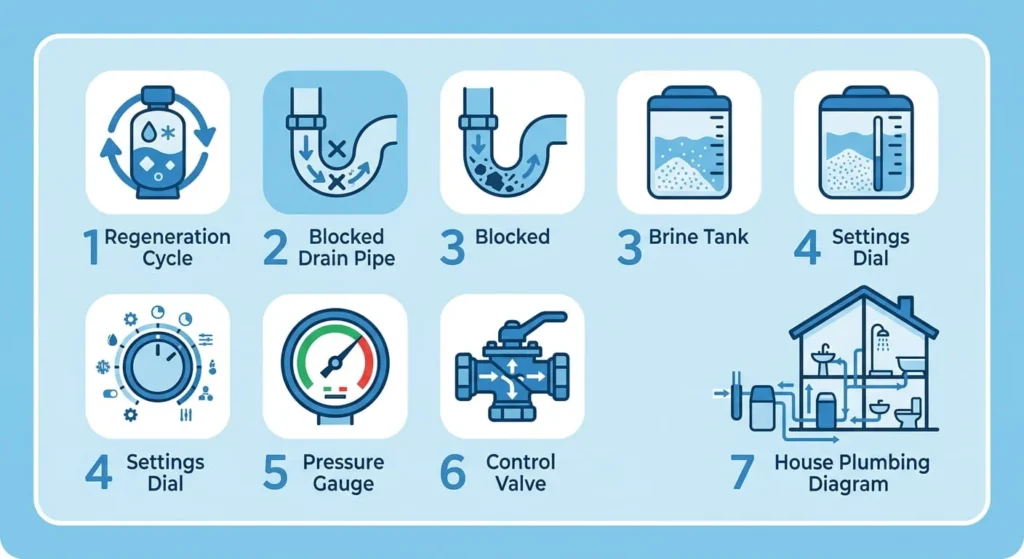
Cause 1: Incomplete Regeneration
Regeneration restores the resin so it can keep exchanging sodium for calcium and magnesium. The system must then rinse away excess brine before supplying softened water again. If regeneration stops early, skips a stage or fails to finish, residual brine may remain in the treatment system.
Possible signs:
- A salty taste immediately after regeneration
- An error message or warning on the display
- An unusually short or long regeneration cycle
- The same problem even when there is plenty of salt in the tank
Symptoms vary by model and cannot establish a particular fault on their own.
What can help: Check the control panel for error codes and consult the manual. Confirm the system has power and that the time and settings look correct. If the unit reports a fault or the taste continues, ask a qualified technician to inspect the regeneration sequence, valve operation and rinse performance. Avoid changing advanced settings without understanding them.
Cause 2: A Blocked or Restricted Drain Line
The drain line carries wastewater away during regeneration. If it is restricted, the unit may not discharge spent brine and rinse water as intended. Causes include a kinked hose, an obstruction, a poorly arranged drain connection or a problem further along the drainage route.
A drainage fault can affect regeneration performance, but it does not automatically mean brine is entering every household tap.
What to look for: If the drain line is visible and safely accessible, check for kinks, crushing or leaks. Do not disconnect the hose or dismantle the valve. A line that looks clear can still be obstructed inside, so a professional can confirm whether it drains properly at the right time.
Fix: Have the restriction identified and corrected to the manufacturer’s requirements. If the drain connection was installed incorrectly, the installation may need correcting rather than clearing.
Cause 3: A Brine-Draw Problem
During regeneration, the softener draws brine from the salt tank into the resin vessel. If it cannot draw brine properly, regeneration may be incomplete.
Possible reasons: a blocked injector, a problem with the brine line or brine valve, a control valve malfunction, or a leak or air in a connection.
Common clues:
- Salt level does not change as expected over time
- Repeated regeneration error messages
- Water at an unexpected level in the brine tank
- Water that is not softened as well as before
Water use, settings and regeneration frequency also affect salt consumption, so none of these clues alone proves a fault.
What you can do: Read the manufacturer’s maintenance instructions and inspect accessible connections for visible damage. Never disassemble the injector or valve assembly unless the manufacturer specifies it and you are qualified. A technician can test brine draw and pinpoint the injector, tubing, valve or other part at fault.
Cause 4: Incorrect Regeneration Settings
Softeners rely on settings such as time, regeneration frequency and, on some models, water hardness or capacity. If these are wrong, the unit may regenerate at an unsuitable interval or fail to operate as intended. A power interruption can upset the clock on some models, and other units may have been configured incorrectly at installation or adjusted without considering local water conditions.
Incorrect settings are only one possible explanation, so check before assuming.
How to approach it:
- Compare displayed settings with the manufacturer’s instructions
- Make sure the clock is accurate, especially after a power cut
- Check for any recent changes to settings
- Confirm the configuration matches your installation and water conditions
If you are unsure what a setting does, ask the installer or manufacturer. Never change regeneration or valve parameters at random.
Cause 5: Water-Pressure or Water-Flow Problems
A softener needs suitable operating conditions to complete treatment and regeneration. If pressure or flow falls outside the unit’s requirements, performance can suffer, depending on the design and the nature of the problem. A wider plumbing restriction, a supply issue or a component that interferes with flow can all contribute.
Signs worth noting:
- A noticeable change in water pressure throughout the home
- Regeneration problems that began after plumbing work
- Similar symptoms at several outlets
- Other appliances showing flow problems
Salty water is not necessarily caused by low pressure, and a salty taste is not a reliable indicator of a pressure fault.
Sensible fix: Check whether the pressure issue affects the whole property or only certain outlets. If the change is sudden or the supply seems abnormal, contact your water supplier or a qualified plumber. A water-treatment technician can confirm whether the softener receives the pressure and flow its manufacturer requires. Never alter mains pressure or bypass plumbing safety devices yourself.
Cause 6: A Faulty Control Valve or Internal Component
The control valve directs water through the stages of the cycle: service, brine draw, rinsing and regeneration. If it becomes worn, obstructed or faulty, the system may not move through those stages correctly. Seals, pistons, injectors and brine-control parts can also affect performance.
Signs may include:
- Repeated regeneration errors
- Unusual noises or cycling
- A persistent salty taste after standard checks
- Water that does not soften as it should
- Visible damage or leaks around the unit
No single symptom proves the control valve has failed. A qualified technician can test operation and advise whether cleaning, repair or replacement is appropriate. Replacing a major component without diagnosis can be expensive and may not solve the problem.
Best approach: Record the model number, any error codes and when the salty taste occurs. This helps the technician narrow down the cause.
Cause 7: The Taste Comes From Another Part of the Water System
It is easy to blame the softener, but the cause may lie elsewhere. The Drinking Water Inspectorate (DWI) notes that unusual tastes can come from domestic plumbing, fittings or treatment equipment, and that incorrectly installed or malfunctioning softeners and filters can cause salty or chemical tastes.
The pattern of the problem can help:
| Pattern | What it may suggest |
| Only softener-supplied outlets taste salty | The treatment system or its plumbing needs attention |
| Softened and unsoftened taps both taste salty | The cause may be upstream or elsewhere in the property |
| Neighbours report an unusual taste | A wider supply issue is possible |
| Taste began after plumbing work or a filter change | The recent work should be investigated |
These patterns are indicators, not a diagnosis.
What to do: If the taste is strong, sudden, or also affects the unsoftened supply, stop drinking the water until you have advice. Contact your water supplier for a suspected supply problem, or a qualified plumber if it appears to be within your property. If the issue is limited to softened outlets, have the softener and its installation assessed.
For an official overview, read the Drinking Water Inspectorate’s guidance on taste and odour in drinking water.
4. How to Fix a Water Softener That Produces Salty Water
The goal is not to hide the taste temporarily but to find out why it happens.

Step 1: Stop drinking strongly salty water. Use an alternative drinking supply while you investigate. If the raw supply also tastes odd, smells of chemicals or looks discoloured, notify your water company.
Step 2: Check the display. Look for error codes, warning lights or a cycle that appears unfinished. Write down exactly what is shown and use the manual to interpret it.
Step 3: Review the salt and brine tank. Confirm the tank holds the salt type the manufacturer recommends and shows no obvious damage or leakage. A full tank does not prove the softener is working properly, and extra salt will not fix every regeneration fault. For a suspected salt bridge or obstruction, follow model-specific instructions or call a professional rather than forcing parts apart.
Step 4: Check accessible pipework. Look for kinks, crushed hoses and leaks. Never remove valve caps, disconnect pressurised pipework or take apart internal components as a diagnostic exercise.
Step 5: Follow the manufacturer’s directions. Some models include a recommended post-regeneration check. Use the procedure for your unit rather than a generic flushing or reset routine, and do not repeat regeneration unless instructed.
Step 6: Book a professional diagnosis. If the water is still salty, call a qualified water-treatment or plumbing professional. They can assess the drain line, brine draw, regeneration sequence, pressure conditions and control valve, and arrange water testing if needed.
Remember: Diagnose before you replace parts. The right fix depends on the real cause.
5. How to Check Your Water Softener After Regeneration
If the salty taste follows regeneration, that is a good moment to assess the system. Waiting times and checks vary by model, so follow your manufacturer’s instructions.
| What to check | What to look for |
| Control panel | Error codes, warnings or an incomplete cycle |
| Timing | Whether the taste begins during or after regeneration |
| Water outlets | Whether softened, unsoftened or both taps are affected |
| Drain line | Visible kinks, leaks or damage |
| Brine tank | Unexpected water levels, damage or unusual conditions |
| Water pressure | A sudden or unusual change in flow |
| Recurring symptoms | Whether the taste returns after every regeneration |
This lets you gather useful information without dismantling anything.
Should you flush the taps? Don’t assume running a tap for a few minutes will solve it. Follow the manufacturer’s guidance and seek professional advice if the water stays salty. If a technician finds a fault, ask what checks must be completed before the water is used for drinking again.
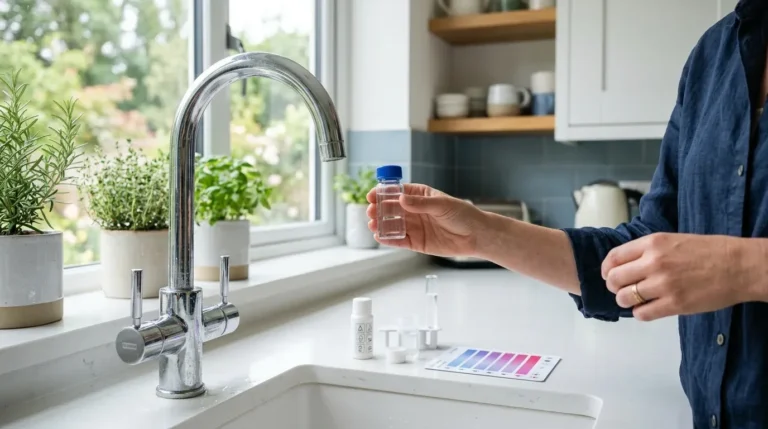
Can a water test help? Yes. Testing can show whether sodium or another measured characteristic is unusual. Taste is a poor indicator of sodium concentration, so testing and expert advice beat guesswork.
6. Can a Water Softener Add Too Much Sodium to Drinking Water?
Yes, a conventional salt-based softener increases the sodium concentration of water. The DWI explains that domestic ion-exchange softeners replace calcium and magnesium with sodium, and the amount added depends partly on the incoming water’s hardness.
Sodium can rise even when a softener works perfectly, while an unusually salty taste may point to a separate fault.
Why incoming hardness matters: Hard water contains dissolved calcium and magnesium. During ion exchange these are replaced with sodium, so as a general principle, the harder the incoming water, the more sodium may be introduced. A salty taste cannot tell you the exact concentration, so testing is better if you need a reliable figure.
What UK authorities recommend: The DWI recommends that households with conventional salt-based softeners keep a supply of unsoftened (hard) water at a separate kitchen tap for drinking and cooking. This matters most for anyone who needs to limit sodium. If you have been advised to follow a low-sodium diet, ask your healthcare professional about your drinking-water arrangements.
Does every softener add sodium? No. Salt-based ion-exchange systems add sodium through the exchange process, while other devices use different approaches to scale management. Check your system type before applying advice meant for salt-based softeners.
You can read the DWI’s guidance on domestic water filters and softeners.
7. Should You Drink Salty Water From a Water Softener?
If the water has suddenly become strongly salty, do not assume it is safe just because it passed through your softener. Use an alternative drinking supply until the issue is assessed, and contact your water supplier if an unsoftened tap is also affected.
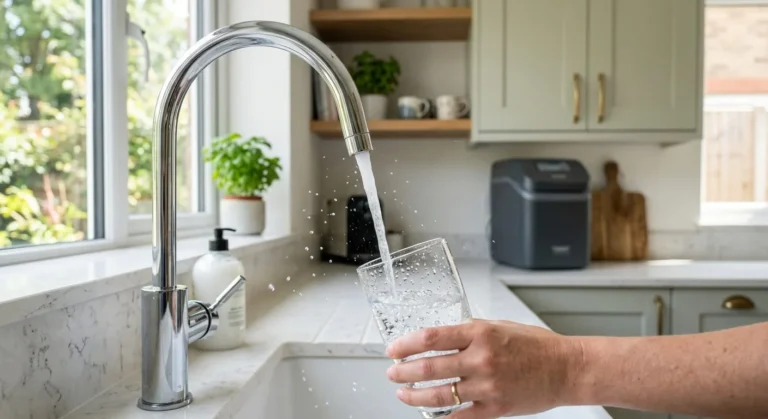
What about the kitchen tap? Many UK installations supply the kitchen drinking tap with water that has bypassed the softener. This avoids the extra sodium from conventional ion exchange. Don’t assume a kitchen tap is unsoftened; ask your installer or a qualified plumber to confirm.
What about baby formula? The NHS advises using fresh water from the cold tap and says not to use artificially softened water to make up infant formula. Follow the current NHS instructions for boiling and temperature, and don’t automatically switch to bottled water, as it is not usually recommended for formula feeds. See the official NHS guide to making up a bottle feed.
8. When Should You Call a Water Softener Professional?
Arrange an inspection if:
- The salty taste remains after the expected regeneration and rinse
- The problem keeps returning
- The softener shows an ongoing error code
- You notice leaks, damaged connections or unusual cycling
- There are large pressure variations
- You suspect a blocked injector, faulty valve or brine-draw problem
- The unit no longer softens water effectively
A qualified technician can inspect regeneration stages, drainage, the brine system and the control valve, and may recommend water testing.
Have this information ready:
- Softener make and model
- When you first noticed the salty taste
- Whether it followed regeneration
- Which taps are affected
- Any warning lights or error codes
- Recent maintenance, plumbing work or power interruptions
If the taste affects your unsoftened supply too, tell your water supplier as well.
9. How to Prevent Salty Water Problems in the Future
Regular maintenance helps a softener run reliably, though it cannot guarantee faults will never occur.
- Follow the maintenance schedule for your specific model, including salt checks, visible leak checks and periodic servicing.
- Use the salt type specified for your system. More salt does not mean better performance.
- Avoid unnecessary setting changes. Ask the installer or manufacturer if water conditions have changed.
- Notice changes in taste. A new or recurring salty taste is worth investigating, especially after regeneration. Seek testing if sodium or safety is a concern.
- Keep an unsoftened drinking supply. For a salt-based softener in a UK home, this is a key DWI-recommended precaution. Make sure everyone in the household knows which tap it is.
- Consider regular professional servicing. Ask what the service includes, which components are checked and how often it is recommended.
10. Frequently Asked Questions
Why does my softened water suddenly taste salty?
If a salty taste occurs suddenly, it could be a regeneration, brine-draw, drainage, or control-valve issue. It could also be from the water supply or plumbing elsewhere. If the taste is strong or lingers, refrain from using the water in question until you receive suitable recommendations.
Is salty water normal after water softener regeneration?
No. A softener uses brine during regeneration and raises the sodium level of treated water, but a strong salty taste is not normal. The timing helps a technician investigate.
Can a blocked drain make softened water taste salty?
A restricted drain can interfere with regeneration and rinsing, but it does not prove residual brine is reaching your taps. The system needs assessing to confirm the cause.
If the water is salty, should I add more salt?
Not automatically. A salty taste does not mean the tank is short of salt, and extra salt won’t fix most faults. Check the manufacturer’s recommendations and arrange an inspection if the taste remains.
How long should I wait after regeneration before checking the water?
It depends on your softener’s design and instructions. Follow the manufacturer’s guidance for when the unit returns to normal service. If the water still tastes strongly salty, don’t keep waiting or repeatedly regenerating.
Does a water softener add sodium to drinking water?
Yes. Salt-based ion-exchange softeners replace calcium and magnesium with sodium, with the amount depending partly on incoming hardness. The DWI recommends keeping an unsoftened kitchen tap for drinking and cooking.
If water tastes salty, should I stop using my water softener?
If the taste is strong and unexplained, avoid drinking the water, follow the manufacturer’s safety guidance and arrange an assessment. Whether to switch off or isolate the unit depends on the fault and installation, so get advice rather than altering plumbing yourself.
Can I prepare baby formula with softened water?
No. NHS guidance says not to use artificially softened water for infant formula. Follow current NHS instructions and use a suitable alternative supply.
When should I contact my water supplier?
Contact them if the odd taste affects an unsoftened tap, occurs independently of the softener, or affects several properties. If it is limited to softened outlets, have the softener and its plumbing assessed.
How can I tell whether my kitchen tap is unsoftened?
Appearance and taste can’t confirm it. Ask your installer or a qualified plumber to check whether the kitchen tap bypasses the softener.
Final Thoughts
Salty water from a softener is frustrating, but the taste is a clue to investigate, not a reason to guess at repairs. The seven causes covered here are incomplete regeneration, a restricted drain line, brine-draw problems, incorrect settings, pressure or flow issues, faulty internal components and problems elsewhere in the water system.
Start by noting when the taste occurs, checking the control panel and reading the manufacturer’s instructions. Don’t dismantle equipment or run repeated regeneration cycles without guidance, and book a professional inspection if the taste persists.
Remember that a conventional salt-based softener raises the sodium content of treated water. In the UK, the DWI recommends keeping an unsoftened tap for drinking and cooking, and NHS advice is not to use softened water for infant formula.
Have you noticed salty-tasting water after your softener regenerates? Share your experience in the comments. It may help other homeowners recognise the signs and know when to seek help.
This article provides general information, not a diagnosis of a particular water-treatment system. Always follow the manufacturer’s instructions and seek qualified assistance for persistent faults.
Affiliate Disclosure: As an Amazon Associate, AquaClariX earns from qualifying purchases. This does not affect our editorial opinions or recommendations.
1:https://www.amazon.co.uk/s?k=water+softener+salt+tablets&utm_source
2:https://www.amazon.co.uk/s?k=water+hardness+test+kit&utm_source
One Comment