Stop Hard Water Hassles: 7 Best Water Softener for Shower Solutions
Short answer: what is the best water softener for a shower?
A water softener for shower can help UK households deal with hard water and stubborn limescale. Ion-exchange softeners remove calcium and magnesium from the water supply, helping keep showerheads, taps and appliances cleaner. Shower filters work differently and generally cannot remove these hardness minerals, although some can reduce chlorine and other impurities.
The right choice depends on your local water hardness, household water use, available space and budget.
Key takeaways
- Hard water leaves limescale. Dissolved calcium and magnesium form deposits on showerheads, glass, tiles and taps.
- A real softener swaps ions. Ion-exchange softeners replace calcium and magnesium with sodium (in salt-regenerated systems).
- A filter is not a softener. Always check the actual treatment technology, not the product name.
- Whole-house systems cover more. They treat every connected outlet, not just the shower.
- Softening protects the future, not the past. Existing scale still needs cleaning.
- Salt-based systems need upkeep. Plan for salt top-ups and servicing.
- UK guidance matters. Keep an unsoftened supply for drinking and cooking when using a sodium-based softener.
Is hard water ruining your shower?
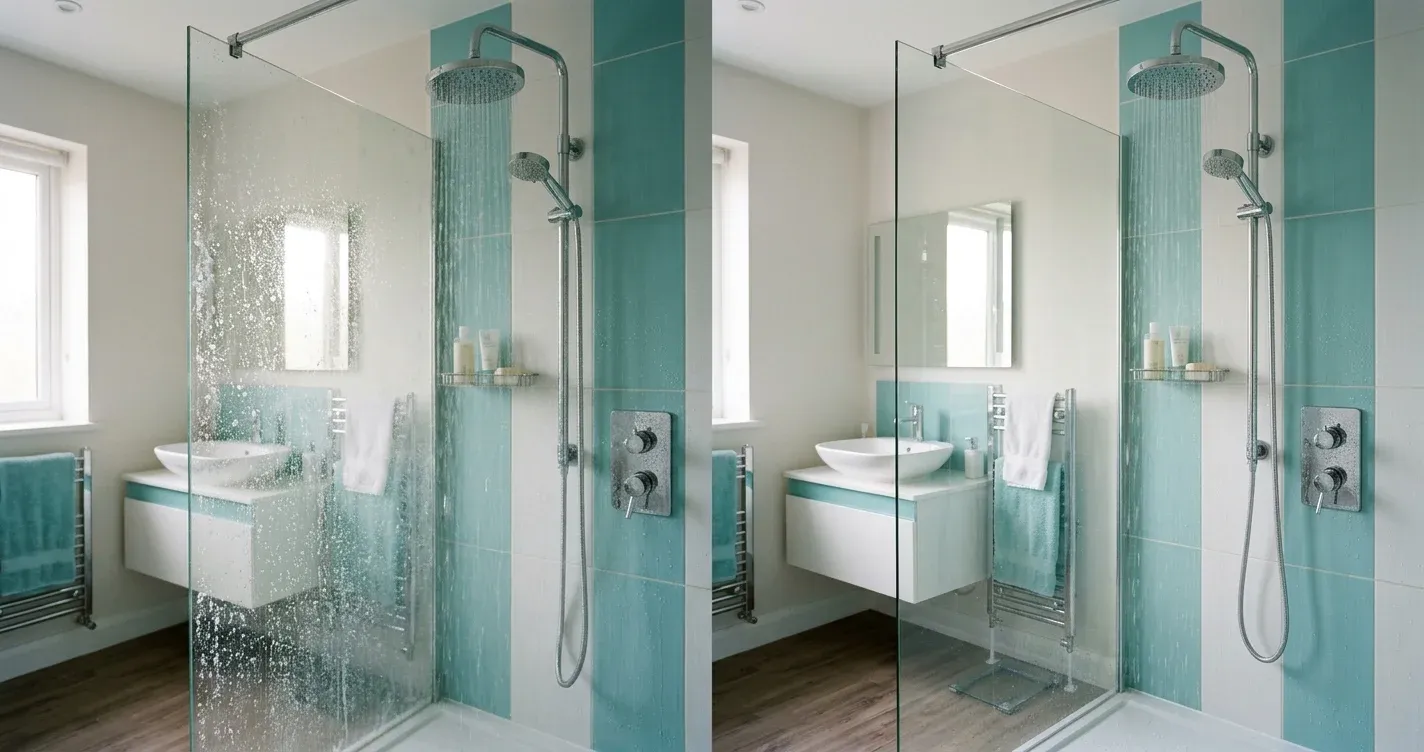
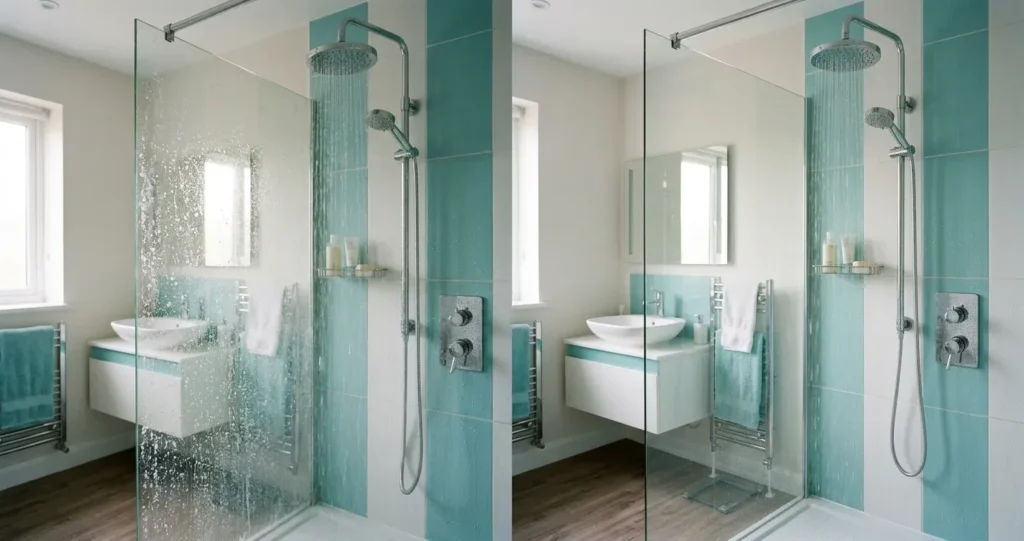
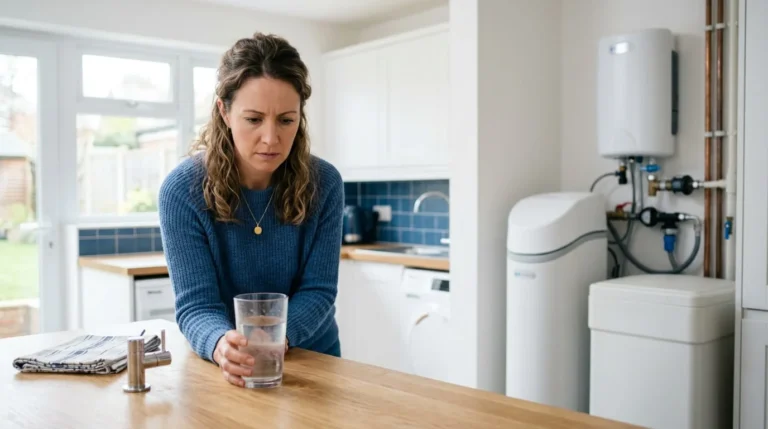
You scrub the shower screen on Sunday and the white marks are back by Wednesday. The showerhead nozzles are crusty. The taps lose their shine within days. Soap scum keeps returning.
These are classic hard water symptoms. Hard water carries dissolved calcium and magnesium. When it dries on glass, tiles and fittings, the minerals stay behind as limescale.
The fix is not as simple as buying a product labelled “hard-water shower filter”. A filter and a genuine softener do very different jobs. This guide covers seven practical solutions, how they work, and how to choose for your UK home.
1. What is a water softener for a shower?
A water softener for a shower is a treatment system that reduces water hardness before the water reaches the showerhead.
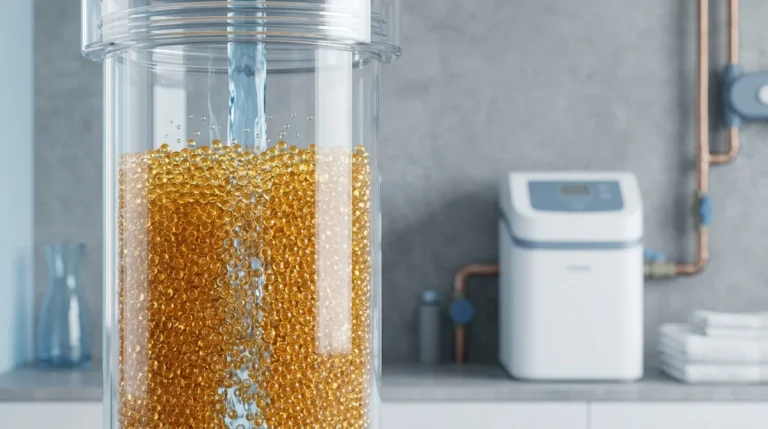
A conventional domestic softener contains a resin bed. As hard water passes through, the resin swaps calcium and magnesium ions for sodium ions. The treated water has reduced hardness, which helps limit new limescale on shower screens, fittings and surfaces.
Does a shower need its own water softener?
Not necessarily. A whole-house softener sits on the incoming supply and treats several outlets at once, such as showers, bathroom taps and appliances. A shower-specific device treats water at or near one shower and may be a filter, a scale-treatment device or a small softening unit. These are not interchangeable, so confirm what any product actually does.
2. How does a water softener work for shower water?
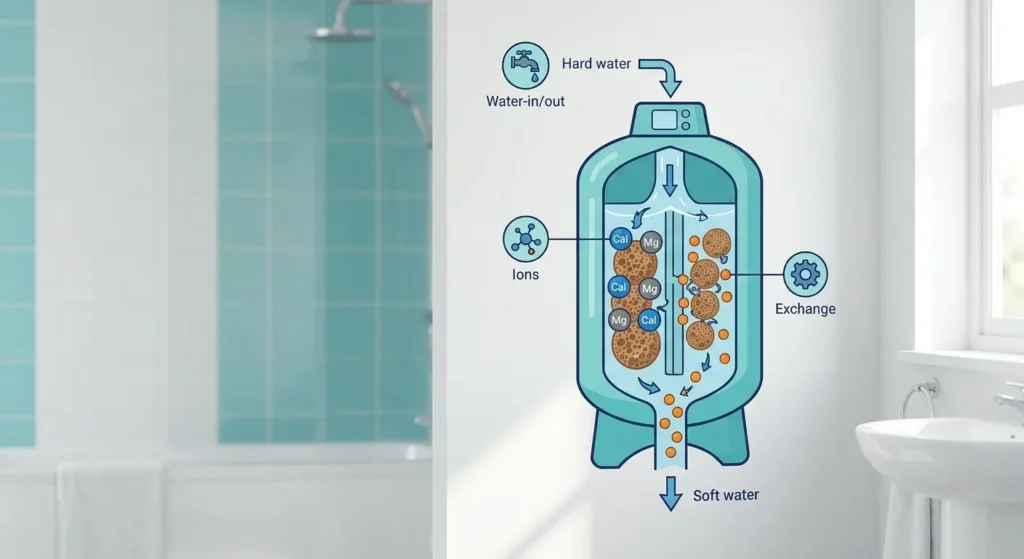
Most domestic softeners use ion exchange:
- Hard water enters the softener.
- It flows through a bed of ion-exchange resin.
- The resin swaps calcium and magnesium for sodium.
- Softened water continues to the shower and other outlets.
- When the resin is full, the system regenerates itself using brine.
What does the resin bed do?
The resin bed is the core of the system. It captures hardness ions as water passes through. When it is loaded, a brine wash restores its capacity. Regeneration sequence, salt use and maintenance vary by model.
Does a water softener remove all minerals?
No. It reduces hardness minerals only. It is not a general purifier and does not replace filters designed for sediment, chlorine or other substances.
3. Why does hard water cause shower problems?
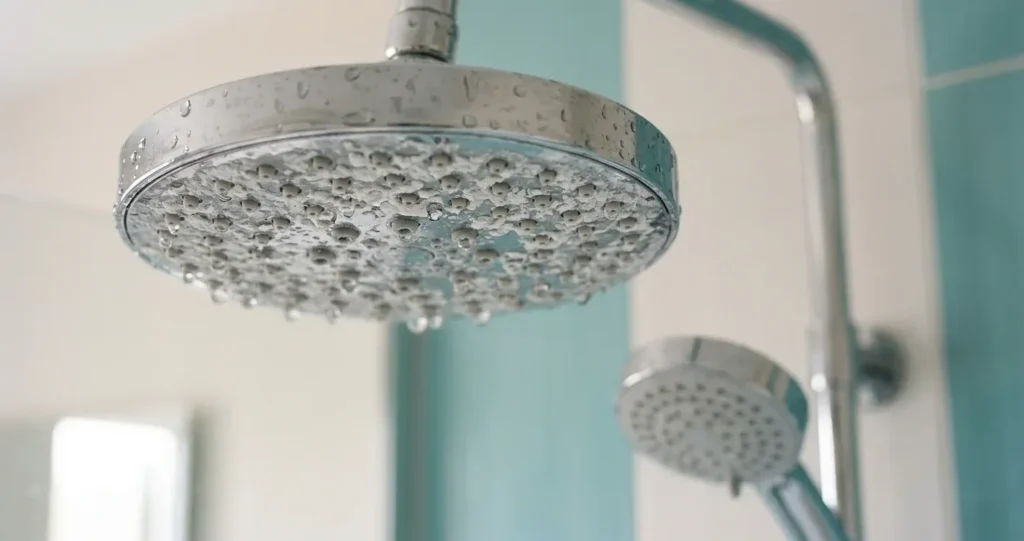
Results vary with water quality, how often surfaces get wet, ventilation and cleaning habits. Common problems include:
- Limescale on showerheads. Scale builds inside the small nozzle openings, changes the look of the fitting and can reduce flow.
- White marks on shower glass. Each time water evaporates, minerals are left behind as spots or a cloudy film.
- Deposits on taps, tiles and fittings. Hard water can also react with soap to leave residue.
- Not every white mark is limescale. Soap scum and other residues need different cleaning methods.
Why cleaning alone does not solve it
Cleaning removes deposits already there. It does not change the hardness of the water coming out of the shower. If marks keep returning, pair sensible cleaning with treatment that addresses the cause.
4. Benefits of softened water for showering
- Less limescale formation. Fewer minerals available means fewer new deposits on showerheads, glass and fittings.
- Easier cleaning. Screens and fittings usually need less intensive scrubbing. A softener reduces one source of deposits but does not remove the need for cleaning.
- Different soap behaviour. Many people notice differences in lather and rinsing, depending on products used.
- Wider home benefits. A whole-house system may reduce scale on appliances such as washing machines. Savings and appliance lifespan are not guaranteed.
5. Does soft water help hair and skin?
Many people prefer how soft water feels, but experiences differ and this is a personal preference rather than a proven health benefit. A softener is not a treatment for dry skin, eczema, scalp conditions or hair loss. If you have persistent skin or scalp problems, seek healthcare advice.
If your concern is chlorine, a shower filter that has been tested for chlorine reduction may suit you better. Check what it has actually been tested to reduce.
6. Water softener vs shower filter: which is better?
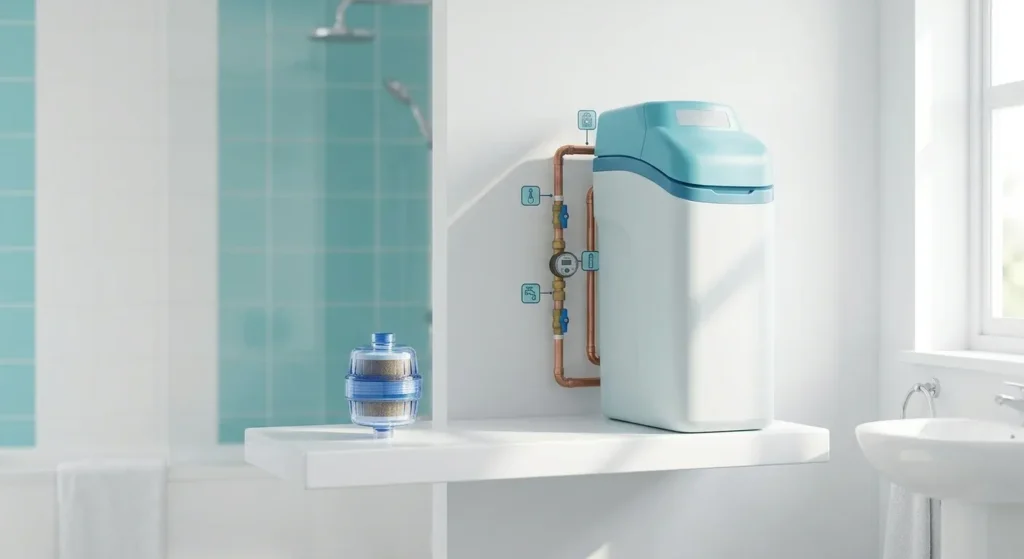
They do different jobs. The better option depends on what you want to change in your water.
| Feature | Ion-exchange water softener | Standard shower filter |
| Main purpose | Reduce water hardness | Treat specified substances |
| Calcium and magnesium | Reduces hardness ions | Usually no significant reduction |
| Limescale control | Helps reduce conventional scale | Limited unless it has verified softening technology |
| Coverage | Can serve multiple outlets | Usually one shower |
| Salt needed | Yes, for salt-regenerated models | Usually no |
| Installation | May need plumbing work | Often simpler |
| Maintenance | Regeneration, salt, servicing | Cartridge replacement |
| Best for | Hardness and limescale | A specific filtration need |
Is a shower filter the same as a water softener?
No. The word “filter” does not mean calcium and magnesium are removed, and the word “softener” should be backed by the product’s real technology and specifications. The UK Drinking Water Inspectorate explains that domestic ion-exchange softeners swap calcium and magnesium for sodium, and recommends keeping an unsoftened supply for drinking and cooking when using conventional sodium-based softening.
Simple rule: if limescale is your main problem, look at genuine hardness reduction. If you need to reduce a specific substance, look at a filter with proven performance for it.
7. The 7 solutions: whole-house vs shower-specific options
No single option suits every property. Use these seven to match the solution to your problem.
Solution 1: Whole-house ion-exchange water softener
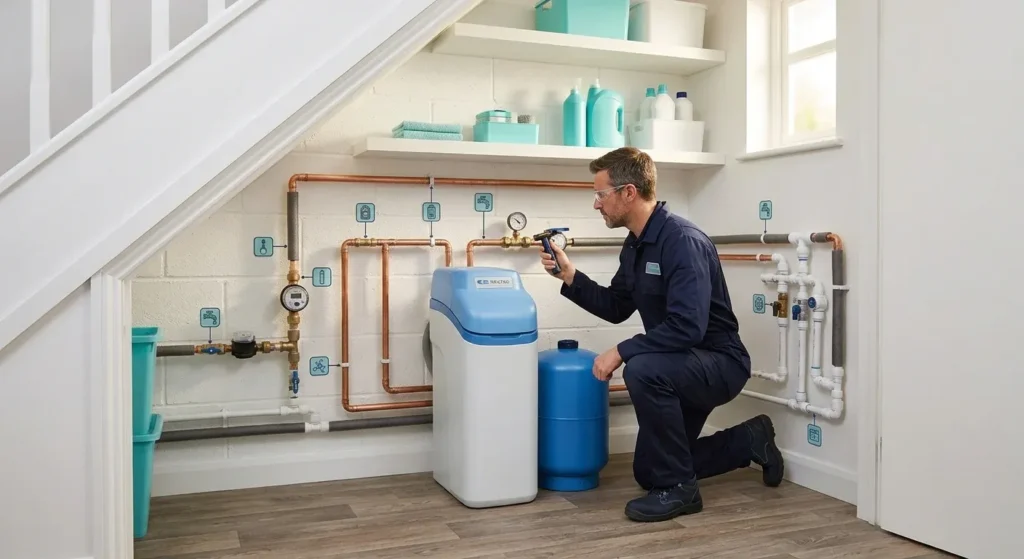
Best for: homes with limescale in several areas, such as the bathroom, kitchen and appliances.
It treats water at a suitable point on the incoming supply so every connected outlet gets softened water.
- Reduced hardness in shower water
- Less limescale on bathroom fittings
- Treatment for other outlets
- One central system to maintain
Consider: installation space, plumbing, drainage, salt supply, regeneration and maintenance. Keep a suitable unsoftened drinking-water supply.
Solution 2: Compact softener for a smaller property
Best for: limited space where you still need genuine softening.
Compact units use the same ion-exchange principle but are built for tighter spaces. A smaller home does not automatically mean a smaller unit will cope. Check:
- Rated softening capacity
- Expected household water use
- Flow rate and operating pressure
- Salt storage and refill needs
- Regeneration requirements
- Installation and service access
Solution 3: Point-of-use softening unit
Best for: treatment at one outlet, where a suitable product exists.
Small shower devices have little space and must cope with shower flow rates. Do not assume a device softens water because the packaging says “anti-limescale” or “hard-water protection”. Verify the technology, hardness-reduction claims, capacity, operating limits and maintenance. A device that filters chlorine or sediment does not reduce hardness like an ion-exchange softener.
Solution 4: Shower filter for a separate filtration need
Best for: reducing a specific substance rather than hardness.
Depending on design, a shower filter may target chlorine, sediment or something else. It is useful for that purpose but is not a substitute for a softener when calcium and magnesium limescale is the issue. Check the exact substances targeted, cartridge replacement intervals, flow requirements and any independent testing.
Solution 5: Clean existing limescale and improve shower maintenance
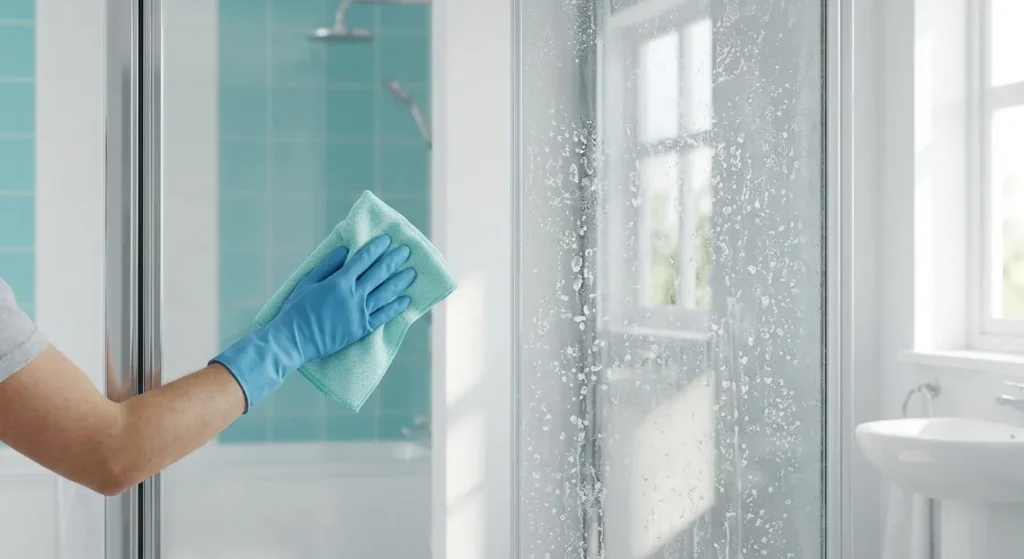
Best for: removing current deposits or taking a low-cost first step.
A softener will not remove scale that has already built up. For existing deposits:
- Identify the surface and the type of deposit.
- Choose a cleaner suitable for that surface.
- Follow the product label and fixture manufacturer’s instructions.
- Avoid abrasive methods that can scratch glass, coatings or metal.
- Rinse and dry as directed.
Never mix cleaning products, and take care with acids around natural stone, grout and sensitive finishes. Wiping glass and fittings dry after showering reduces water marks.
Solution 6: Test your water hardness first
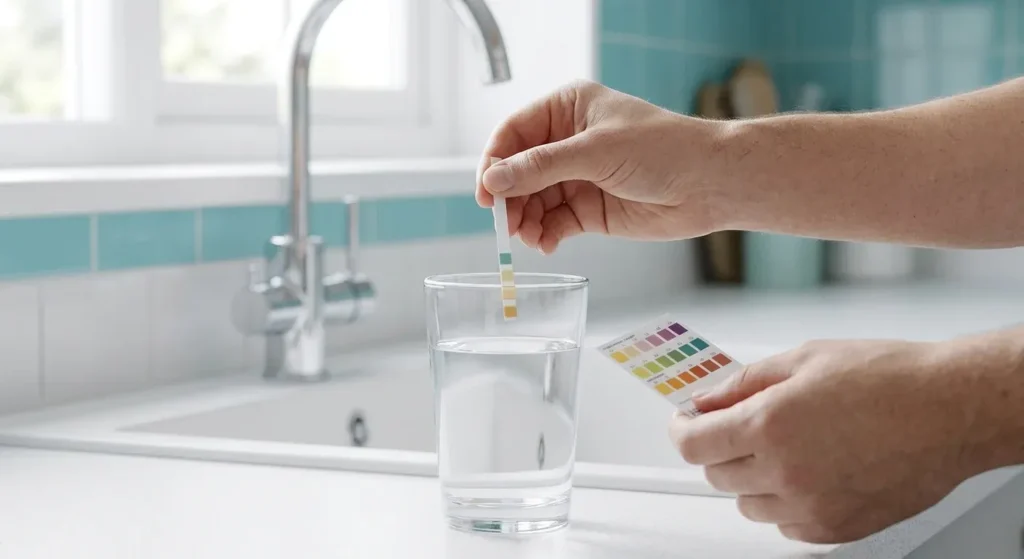
Best for: anyone unsure whether a softener is needed.
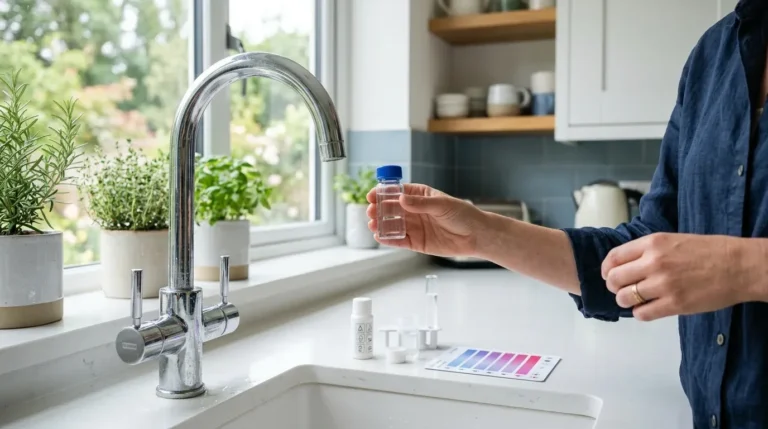
Hardness varies across the UK. Check your water company’s local hardness information, and use a test kit for a property-specific reading. Then consider:
- How much limescale appears in the bathroom
- Whether appliances are affected
- How many people use water at home
- Whether you have a suitable installation location
- Whether you want treatment at one outlet or throughout the house
Solution 7: Choose a properly sized system and arrange professional installation
Best for: homeowners ready for a long-term hardness fix.
Even a genuine softener disappoints if capacity, flow rate or installation is wrong. Size it to your water hardness, demand and pressure, and ask a qualified installer to assess plumbing, drainage and access. For salt-based systems, discuss regeneration, salt use and which outlets should stay unsoftened. Follow the manufacturer’s instructions and UK water-supply and plumbing requirements.
The key lesson: the best solution is not the biggest or most expensive. It is the one that reliably does the job in your home.
8. How to choose the best water softener for your shower
- Check your local water hardness. Find out if your supply is soft, moderately hard or hard. The Drinking Water Inspectorate’s hardness guidance explains what the figures mean.
- Decide on whole-house or point-of-use. Is limescale limited to one shower, or are taps, kettles and appliances affected? Is there space for a central unit? Are you comfortable with salt and servicing?
- Check flow rate and capacity. Homes with multiple bathrooms or simultaneous high demand benefit from professional sizing.
- Compare total cost of ownership. Include installation, salt, servicing and parts, not just the purchase price.
- Review maintenance and warranty. Know how it regenerates, what upkeep is needed and what the warranty covers.
9. How to soften hard water for a shower at home: 7 steps
- Define the problem. Check your water hardness and note where limescale appears.
- Set your goal. Reduce hardness, filter a specific substance, or clear existing buildup.
- Compare technologies. For hardness, look at genuine ion-exchange softeners and verify specifications.
- Assess your household demand. Consider water use, shower usage, system capacity and whether more outlets need treating.
- Plan the installation. Confirm plumbing, drainage, space, pressure and access with the manufacturer or a qualified installer.
- Commission correctly. Follow installation instructions, including any hardness settings.
- Maintain it. Top up salt, follow service guidance and check it keeps working as intended.
10. Can a water softener prevent shower limescale completely?
No. A properly working softener can significantly reduce the minerals that form typical limescale, but it cannot guarantee that every surface stays spotless. Visible scale depends on residual hardness, water droplets, evaporation, existing deposits, system settings and equipment condition.
If deposits keep appearing, check the softener is configured and maintained correctly, and confirm the marks are limescale rather than soap residue.
11. Seven common mistakes when choosing a shower water softener
- Assuming every shower filter softens water. Many do not reduce calcium or magnesium.
- Ignoring local water hardness. Match the system to your actual conditions.
- Skipping the flow-rate check. The unit must handle shower demand.
- Forgetting installation needs. Check space, drainage and any plumbing changes before buying.
- Expecting old limescale to vanish. Softening prevents new scale; old scale needs cleaning.
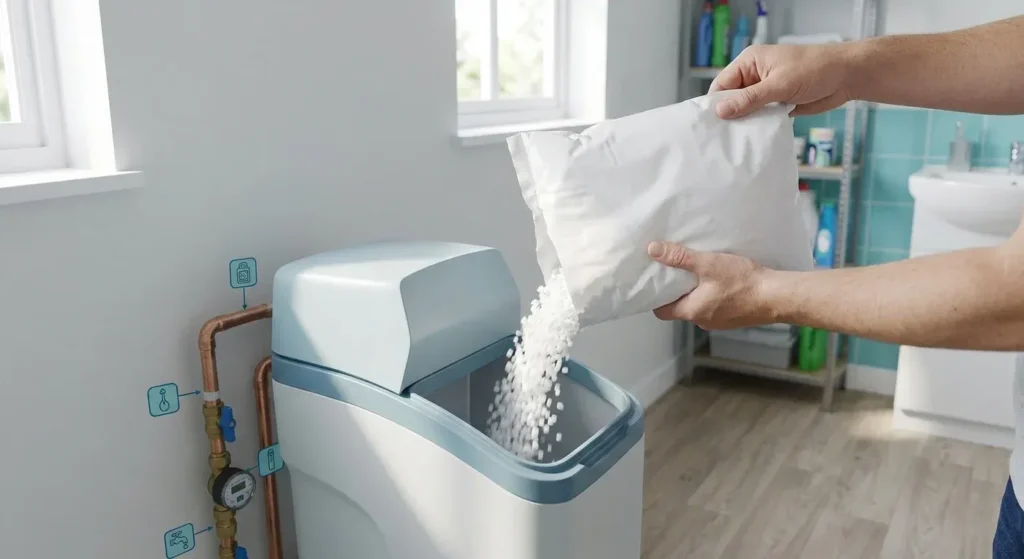
- Ignoring maintenance. Salt-based softeners need regular salt top-ups and servicing.
- Overlooking drinking water. Sodium-based softening adds sodium to treated water. Follow UK guidance to keep an unsoftened supply for drinking and cooking, and consult a qualified professional if you have concerns.
12. Water softener for shower: myths vs facts
| Myth | Fact |
| Every shower filter softens hard water. | Many filters do not significantly reduce calcium and magnesium. |
| Softened water eliminates all limescale. | It reduces conventional scale formation, but some deposits may still occur. |
| Every home needs a water softener. | It depends on water hardness and household priorities. |
| A shower softener must be fitted at the shower. | A whole-house system can treat water before it reaches every outlet. |
| A water softener purifies water. | It reduces hardness only and does not replace filtration. |
| Softened water guarantees healthier skin and hair. | Experiences vary, and a softener is not a medical treatment. |
| The cheapest system is the best option. | Capacity, flow rate, installation and running costs all matter. |
13. Top tips for UK homeowners
- Start with facts, not marketing. Get hardness data from your water supplier.
- Think whole home. Scale in the shower often means scale on taps, kettles and appliances too.
- Separate softening from filtration. Hardness problem, choose a softener. Specific contaminant, choose a tested filter.
- Read the specs. Capacity, flow rate, pressure range, regeneration, salt use, maintenance and warranty.
- Plan for UK drinking-water guidance. Keep an unsoftened supply for drinking and cooking with sodium-based systems, and ask your installer for the best layout.
- Count long-term cost. Installation, servicing and running costs matter more than the sticker price.
- Keep cleaning realistic. Even with soft water, wipe glass and clean fittings as the manufacturer recommends.
14. FAQ: water softener for shower
Does a water softener help with shower water?
Yes. A properly installed ion-exchange softener reduces the calcium and magnesium that make water hard, which helps limit typical limescale in your shower.
Does a water softener reduce limescale in the shower?
Yes. Lower hardness means less new mineral scale. Existing deposits may still need cleaning.
Is a shower filter the same as a water softener?
No. A shower filter treats particular substances depending on its media. A conventional ion-exchange softener reduces hardness minerals.
Can softened water be used in a shower?
Yes. Domestic softeners can supply softened water to showers when installed and operated according to the system’s requirements.
Does a water softener remove calcium and magnesium?
Yes. Ion-exchange softeners reduce both by exchanging them for replacement ions, usually sodium.
Is softened water better for showering?
It may reduce scale and change how soap behaves. Whether it feels better is subjective, and it is not a guaranteed health or cosmetic improvement.
What is the best water softener for a shower in the UK?
There is no single best option. Compare your water hardness, capacity, flow rate, installation needs, maintenance and the manufacturer’s evidence for its claims.
Do UK homes need a water softener for showers?
Not necessarily. It depends on local hardness, how much scale affects your home and whether the benefits justify the cost and upkeep.
Can I install a water softener myself?
Requirements vary by system and property. Some need plumbing, drainage and suitable water supply connections. Follow the manufacturer’s instructions or use a qualified professional.
Will a water softener remove existing limescale from shower glass?
Not immediately. It helps prevent future scale, but existing scale needs a cleaner suitable for the material.
Does a water softener remove chlorine?
No. A standard ion-exchange softener targets hardness, not chlorine. Choose a filter with proven chlorine reduction if that is your concern.
Does softened shower water guarantee healthier hair or skin?
No. Some people notice a difference, but results vary, and a softener is not a treatment for medical skin or hair conditions.
Conclusion: choose the right water softener for your shower
A water softener for a shower can be an effective answer to hard water and recurring limescale in UK homes, as long as the system you choose targets the actual cause.
A true ion-exchange softener reduces the calcium and magnesium that make water hard. A typical shower filter addresses something else, and regular cleaning handles existing deposits. For widespread hardness problems, a properly sized whole-house softener is often the most complete approach. For a narrower concern, look at suitable point-of-use treatment or filtration, and verify what the product genuinely does before buying.
Start by finding out how hard your water is. Then compare systems on capacity, flow rate, installation, maintenance and total cost of ownership. If you choose a sodium-based softener, follow UK guidance and keep an unsoftened supply for drinking and cooking.
The goal is not to buy something labelled “shower softener”. It is to find a practical, evidence-based solution that fits your water, your home and your priorities.
Your next step: Have you tried a water softener or shower filter? Leave a comment and share what worked, what did not, and how you manage limescale at home. Your experience could help another homeowner decide.
Sources:
1:https://www.amazon.co.uk/s?k=hard+water+filter+shower+head&utm_source
2:https://www.amazon.co.uk/s?k=shower+head+limescale+remover&utm_source
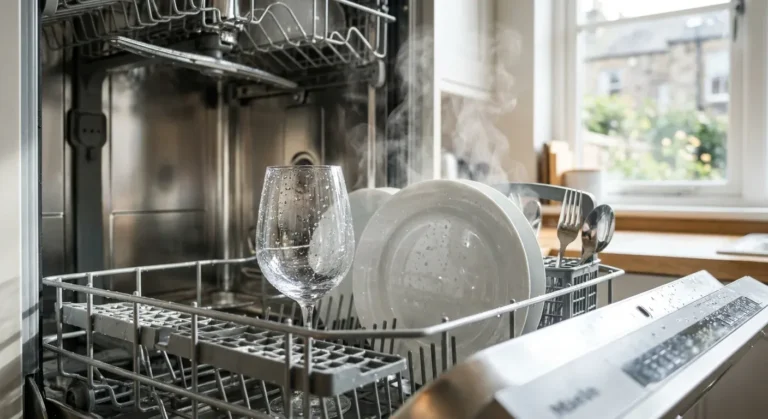
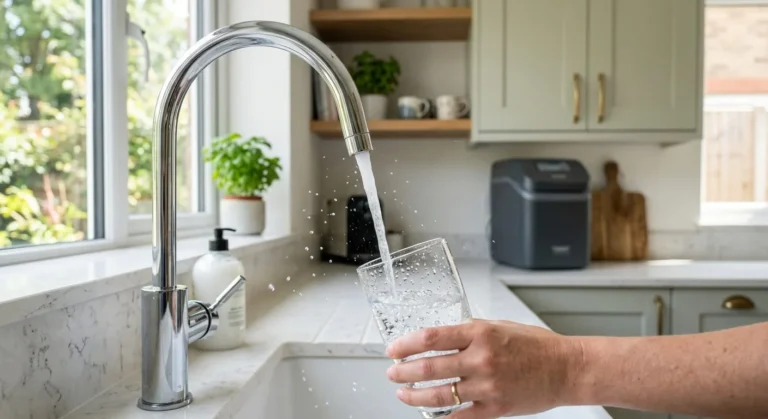
Water hardness is the amount of dissolved minerals, mainly calcium and magnesium, present in water. These minerals can cause limescale build-up on taps, kettles, pipes and household appliances.
You can test water hardness using test strips, liquid drop-count kits or a digital hardness tester. Once you know your water’s hardness level, you can choose the correct water softener settings and determine whether a softener is suitable for your home.
Testing your water before installing or adjusting a water softener helps you make a more informed decision.
Water hardness refers to the amount of dissolved minerals, mainly calcium and magnesium, present in water. These minerals can cause limescale build-up on taps, kettles, pipes and appliances.
You can test water hardness using test strips, liquid drop-count kits or digital hardness testers. Once you know your water’s hardness level, you can choose the appropriate water softener settings for your home. Testing your water first helps ensure your softener is set up correctly and works efficiently.
Water hardness refers to the amount of dissolved minerals, mainly calcium and magnesium, present in water. These minerals enter the water as it passes through rocks and soil.
Hard water can cause limescale build-up on taps, kettles, pipes and household appliances. It can also make soap less effective and leave marks on bathroom surfaces.
The higher the calcium and magnesium content, the harder the water. Testing your water hardness can help you understand your water quality and decide whether a water softener is suitable for your home.
Water hardness refers to the amount of dissolved minerals, mainly calcium and magnesium, present in water. These minerals can cause limescale build-up on taps, kettles, pipes and household appliances. The higher the mineral content, the harder the water. Testing your water hardness can help you understand your water quality and decide whether a water softener is right for your home.